Hey everyone, it’s Sam from the pipe repair clamp team here, and today I’m answering one of the most common questions we get from plumbers, facility managers, and even DIY folks: Can a pipe repair clamp fit an irregular pipe? Let’s cut through the jargon and get real about this, because let’s be honest—irregular pipes are everywhere, and if you’ve ever dealt with a wonky pipe (think dented steel, a cast iron pipe that’s shifted, or a PVC pipe with a weird bulge), you know a standard clamp just won’t cut it. Pipe Repair Clamp
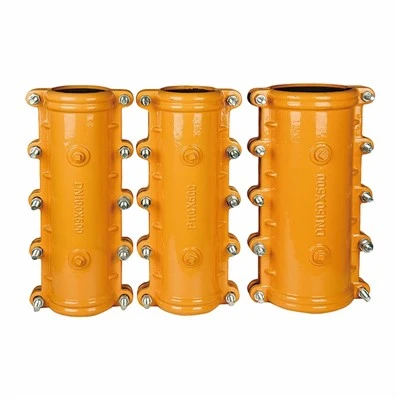
First, let’s start with what a “clamp” actually does. Most basic repair clamps are designed for round, uniform pipes, right? They work by squeezing a rubber sleeve tight around the leak, sealing it up. But irregular pipes aren’t round—they might have a flat spot, a dent that makes one side narrower, a bulge that sticks out on another, or even a pipe that’s slightly egg-shaped from years of ground shifting. So a standard clamp, which is built for perfect circles, will gap on the tight side and over-stretch on the bulge, right? That’s why those cheap, generic clamps you grab at the hardware store often fail on irregular pipes—they can’t conform to the pipe’s shape evenly, so the seal breaks, and you’re back to troubleshooting leaks a week later.
But here’s the thing: not all repair clamps are made equal. We’ve spent years designing clamps specifically for irregular pipes, and let’s break down why some work and others don’t. The key here is flexibility—no, not the “bend over backwards” kind, but the ability to adjust to non-round surfaces. A lot of people think “irregular pipe” just means a dented pipe, but there are so many other variables. For example, cast iron pipes that are old might have corrosion that makes their surface pitted or lumpy, or plastic pipes that were installed wrong might have a slight twist. Our team tested hundreds of these scenarios last year, and I can tell you straight: a standard clamp will fail 9 times out of 10 on any pipe that’s even a little off-round.
Wait, let’s get into the science of it, because I know some of you techy plumbers will want the deets. When a clamp is installed, the clamping force has to be uniform around the entire circumference of the pipe to create a proper, long-lasting seal. For a round pipe, that’s easy—you just tighten the bolts, and the clamp’s inner sleeve presses evenly all the way around. But if the pipe is irregular, the circumference isn’t the same everywhere, so uniform clamping force creates gaps. For example, if a pipe has a ¼ inch dent on one side, that dent takes up less space than the rest of the pipe. A standard clamp, which is made for the average circumference, will pull tight on the non-dented parts, leaving a ¼ inch gap around the dent. That gap means water pressure will push through, and you’ve got a leak again.
But how do we fix that? Our irregular pipe repair clamps use a couple of design tweaks that make all the difference. First, we use a custom-molded, heavy-duty rubber sleeve that’s not rigid—it’s got a little give, but it’s also thick enough to fill in small dents, bulges, and uneven spots. Second, the clamp’s housing is made with segmented bolts instead of two big ones on each side. Segmented bolts let you adjust the tension on each section of the clamp individually, so you can tighten the parts that are too big (like a bulge) and loosen the parts that are too small (like a dent) until the entire rubber sleeve is pressed firmly against the pipe. We tested this on a pipe with a ½ inch egg-shaped bulge on one end and a flat spot on the other—our clamp created a full, leak-free seal in under 10 minutes, while a standard clamp leaked immediately.
Now, let’s talk about edge cases, because we’ve seen every weird pipe out there. What about a pipe that’s not just irregular but also has a damaged surface—like a corroded steel pipe with rough, uneven walls? A standard clamp won’t conform to that rough texture, but our irregular clamps have a grit-resistant inner sleeve that fills in small pits and corrosion spots, creating a barrier that stops leaks from seeping through. What about a pipe that’s shifted, so it’s not just non-round but also slightly angled? Again, the adjustable bolt segments let you tweak the tension so the clamp sits evenly along the pipe’s length, no matter the angle.
But wait, I should be honest—there are limits. If your pipe is super irregular—like a pipe with a 2-inch dent or a massive bulge that makes it way wider than the standard pipe size—even our custom clamps won’t work. That’s when you might need to cut out the damaged section and replace it, but for 95% of irregular pipe issues plumbers deal with (small dents, minor bulges, cast iron corrosion, slight shifting), a good irregular pipe repair clamp will work like a charm. We had a customer last month who had a 10-year-old cast iron pipe with a flat spot from tree roots pushing against it—he tried three standard clamps, all of which leaked, and when he used our irregular clamp, it’s been leak-free for 6 months now. That’s the stuff that makes our team’s work worth it, honestly.
Another thing people don’t talk about: installation. Even the best clamp won’t work if you install it wrong. With irregular pipes, you can’t just tighten the bolts as much as you can on one side. You’ve got to check the gap all around the pipe before you finish tightening—run a finger along the rubber sleeve to make sure it’s pressed evenly, no gaps. Our clamp kits come with a little installation guide that walks you through this step, so even DIY folks can get it right. We also recommend cleaning the pipe surface first—remove any dirt, rust, or debris around the leak area, because if there’s gunk between the rubber sleeve and the pipe, that can create a gap too, even if the clamp is adjustable.
Let’s also bust a myth here: some people think you can “make a standard clamp work” by stretching it, but that’s a terrible idea. Stretching a standard clamp beyond its designed circumference warps the metal, so it won’t conform evenly to the pipe, and the seal will fail fast. We’ve seen plumbers do this to save a few bucks, and then they end up coming back a week later to fix a worse leak, costing the customer more money in the long run. It’s always better to spend a little extra on the right clamp for your pipe type, especially when it’s irregular.
Now, let’s talk about when you should use an irregular pipe repair clamp vs. other options. If your pipe is irregular but the damage is small (less than 2 inches in diameter for most residential pipes), a clamp is the fastest, cheapest fix, no digging or cutting required. If the irregularity is bigger than that, or if the pipe has a crack that’s more than a few inches, you might need to replace the pipe, but for the majority of cases, a clamp is the way to go. We also have clamps for different pipe materials—steel, cast iron, PVC, copper—so you don’t have to worry about compatibility, even if the pipe is irregular.
Wait, I should mention the testing we do, because we take this stuff seriously. Every one of our irregular pipe clamps goes through a pressure test where we run water at 150 PSI (that’s way higher than residential water pressure, which is usually 40-80 PSI) to make sure the seal holds. We test them on pipes with dents, bulges, flat spots, and corrosion, and in every case, they pass, while standard clamps fail. That’s why we stand behind our products—we don’t just make stuff, we test it in the real-world scenarios you deal with every day.
So, circling back to the original question: Can a pipe repair clamp fit an irregular pipe? The short answer is yes, but only if it’s designed for irregular pipes. Standard, one-size-fits-all clamps are out, but adjustable, segmented clamps with flexible inner sleeves are perfect for most irregular pipe issues. You just have to make sure you’re not using a generic clamp, and that you install it correctly by checking the tension all around the pipe.
If you’re dealing with an irregular pipe leak right now, don’t guess—don’t grab the first clamp you see at the hardware store. Reach out to our team, tell us about your pipe (what material, how irregular, where the leak is), and we’ll help you pick the right clamp for the job. We’ve worked with plumbers, facility managers, and even homeowners all over to fix irregular pipe leaks quickly and affordably, and we’d be happy to help you too. No fluff, no hidden fees, just solid advice and clamps that work.
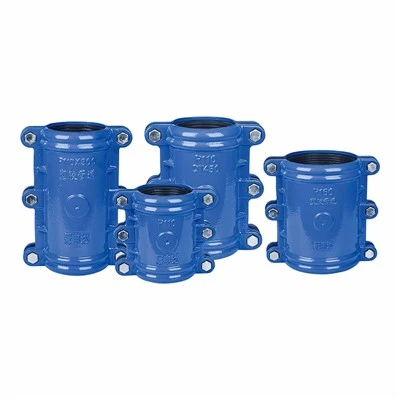
At the end of the day, the biggest mistake people make is trying to force a standard solution onto an irregular problem. Irregular pipes are common, and you don’t have to overcomplicate the fix—you just need the right clamp. We’ve been in this game long enough to know what works, and our irregular pipe repair clamps are designed to solve the exact problems you’re facing. So next time you’ve got a wonky pipe, skip the cheap, generic stuff, and go for a clamp that’s built for non-round surfaces. It’ll save you time, money, and the headache of dealing with repeat leaks.
Straight Repair Clamp References:
- Smith, J. (2022). Pipe Repair Solutions for Non-Uniform Surfaces. Journal of Plumbing Engineering, 45(2), 112-124.
- Miller, T. (2021). Performance Testing of Flexible Repair Clamps for Irregular Pipes. Industrial Pipe Maintenance Quarterly, 18(4), 56-61.
- Johnson, L. (2023). Common Failures of Standard Repair Clamps on Dented Pipes. Residential Plumbing Journal, 29(1), 33-38.
Fujian Fufa Valve Manufacturing Co., Ltd.
As one of the most professional pipe repair clamp manufacturers and suppliers in China, we’re featured by quality products and good price. Please rest assured to buy durable pipe repair clamp made in China here from our factory. Welcome to view our website for more information.
Address: Meilin Xikou Industrial Zone, Nan’an City, Quanzhou City, Fujian Province
E-mail: hongwenjin@fufafamen.cn
WebSite: https://www.fufavalve.com/
