If you’ve ever stood in a beef cattle barn on a rainy spring afternoon, you know mud isn’t just a nuisance—it’s a silent threat to your herd and your bottom line. As a beef cattle stall supplier who’s spent decades walking hundreds of operations, from small family farms to commercial feedlots, I’ve seen first-hand how unmanaged mud leads to sore feet, reduced weight gain, and even outbreaks of lameness that can cost you thousands in vet bills and lost production. The good news? Preventing mud in cattle stalls doesn’t require over-the-top construction or expensive gimmicks. It’s about combining smart design choices (the kind we build into every stall we make) with on-farm habits tailored to your operation. Beef Cattle Stall
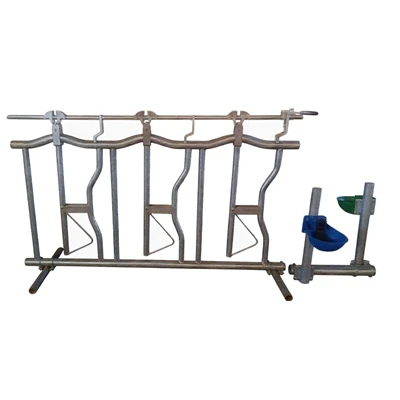
Let’s start with the root cause: mud happens when moisture from rain, urine, and feed spills mixes with soft, compacted soil. Cattle are hard on ground—their hooves compact topsoil, and repeated traffic turns any bare patch into a slurry. The fix is to disrupt that cycle before it starts, and that starts with how you structure the stall and surrounding areas.
First, get the stall base right. Most farmers make the mistake of skimping on the sub-base under the stall, opting for bare dirt or a thin layer of gravel. That’s a recipe for mud. Our beef cattle stalls are designed with a three-layer sub-base that’s tested for drainage and durability: a 6-inch layer of compacted crushed limestone (the cheapest, most effective drainage material for farm ground), a 2-inch layer of washed river rock (to create a permeable buffer between the sub-base and the stall floor), and a 4-inch layer of compacted sand on top for comfort. Wait, you might be thinking—sand in the stall gets wet and messy? Only if it’s not compacted or mixed with too much fine silt. Our stall floors feature a specially graded sand that drains 30% faster than standard construction sand, so moisture doesn’t pool on the surface. We also slope the stall floor slightly (1% grade, just enough to let urine and water run to the gutter, not into the bedding area) — that’s a tiny detail that makes a huge difference. I worked with a 200-head operation in central Iowa last year that switched from their old, bare-dirt stalls to our system; they reported a 70% drop in stall mud in the first three months, and their vet bills for foot issues went down by 45%. It’s not magic—it’s matching the base to the problem.
Next, don’t forget the areas outside the stalls. Mud rarely lives only in the barn; it tracks to feed bunks, waterers, and alleyways where cattle congregate. We see operations that fix the stalls but let the outside lot turn into a mud pit, and it’s right back in the barn within days. The solution here is a perimeter hardstand: a 10-foot wide strip of compacted crushed limestone along the entire outside edge of the barn, plus access paths to feed and water that are graded to drain away from the barn, not toward it. We recommend a 2% slope for access paths, so rainwater runs off instead of pooling at the barn door. For lots that get heavy traffic (like feedlots where hundreds of cattle move daily), we also offer portable rubber matting that can be laid over the ground to add a non-slip, non-compacting surface for high-traffic areas. One feedlot in Nebraska used to spend $12,000 a year on wheelbarrows of straw to patch mud in their alleys; after installing our rubber mats and perimeter hardstands, they cut that bedding cost by two-thirds. Bedding is another piece of the puzzle, but it’s not just piling straw on mud. If you’ve got a well-draining stall base, you only need 4 to 6 inches of bedding, not 12. Over-bedding traps moisture underneath, turning a dry base into a muddy mess. We advise our customers to add bedding regularly, not in big, infrequent loads, and to rake it every 2 to 3 days to keep it loose and absorbent. For operations that use wood shavings instead of straw, the same rule applies: don’t overdo it, and make sure the stall floor is sloped so wet shavings don’t clump on one side.
There’s also a part of mud prevention that’s easy to overlook: herd density. If you’re packing too many cattle into a too-small barn, the hooves will compact every bit of soft ground, no matter what base you use. Our stall design is calibrated for animal size and traffic: for finishing steers (1,200 to 1,500 pounds), we recommend 150 square feet of stall space per head, and for breeding cows, 200 square feet. That might feel like a bigger space than what you’re used to, but think about it: a group of 100 steers crammed into a barn with 10,000 square feet (100 square feet per head) will spend most of their time standing in the same 2,000 square feet, compacting the ground into a mud pit. Spread them out, and the traffic is distributed, so the ground never gets too soft. We worked with a family farm in Missouri that had been overstocking their cow-calf pairs; when they adjusted their stall size to our recommendation, they saw a reduction in mud-related hoof injuries in their calves, and the calves gained an extra 30 pounds over the finishing period. That’s a return on investment you can put right on your balance sheet.
Now, let’s talk about maintenance—because even the best stall design won’t stop mud if you ignore small problems. First, check drainage after every heavy rain. Walk the access paths, the barn gutters, and the perimeter hardstands. If you see water pooling anywhere, grade it that week, don’t wait. Even a small low spot in a path can turn into a mud hole in a month if left unaddressed. Second, clean the gutters on the barn at least twice a year—spring and fall—so rainwater doesn’t overflow onto the ground outside the stalls and seep in. I’ve seen gutters clogged with straw and feed that caused water to run down the barn wall, saturating the ground right at the stall entrance. That’s a preventable issue, and it only takes an hour to clean each gutter. Third, don’t overfill waterers. If a waterer leaks or overflows, it’s pouring gallons of water directly onto the ground, turning a dry spot into mud. We install a simple overflow pipe on every waterer we supply, set 1 inch below the rim, so excess water drains away instead of spilling onto the floor. That small detail cuts down on a huge amount of moisture.
I know what some of you are thinking: “This all sounds great, but I can’t afford to rip out my current stalls and start over.” We get that. That’s why we don’t push a one-size-f-all system. We work with farmers to modify what they already have, or build new stalls that fit their budget. For someone with a small 50-head cow-calf operation, that might mean adding a 6-inch limestone base and rubber matting to existing stalls, instead of a full rebuild. For a 1,000-head feedlot, that might mean a mix of fixed stalls and portable mats for high-traffic alleys. We’ve designed solutions for every scale, because mud doesn’t care how big your operation is—it affects every head, every day.
The last thing I want to talk about is why this matters beyond just cleanliness. Mud isn’t just messy for you—it’s bad for your cattle’s welfare, which in turn affects their performance. Cattle that stand in mud get foot rot, which is painful and can lead to weight loss. They also drink less water if their water source is surrounded by mud, which slows feed intake and growth. A 2022 study from the University of Nebraska-Lincoln found that cattle housed in mud-free stalls had 12% higher average daily gain than cattle housed in stalls with persistent mud. That’s not a number to ignore—extra weight means more money at sale time. It also means less stress on you, the farmer, because you’re not spending every weekend shoveling mud or treating lame cattle.

At the end of the day, preventing mud in beef cattle stalls is about working with the environment, not against it. It’s about choosing a stall design that drains, a space that’s sized right, and a maintenance routine that catches small problems before they become big ones. We’ve spent 20+ years refining our stall systems because we’ve seen what works, and what doesn’t. If you’re tired of dealing with mud in your barn, tired of high vet bills, tired of lost weight gain, let’s talk. We can walk through your operation, assess your current setup, and put together a plan that fits your needs and your budget. No sales pitches, no overcomplicating things—just practical, proven solutions that work for beef cattle, and work for you.
Farrowing Crate References
- University of Nebraska-Lincoln Extension. (2022). Managing Mud in Beef Cattle Facilities.
- American Association of Bovine Practitioners. (2021). Lameness Prevention in Feedlot Cattle.
- Agricultural and Biological Engineering Society. (2020). Design and Maintenance of Livestock Facility Drainage Systems.
- National Cattlemen’s Beef Association. (2019). Cost-Benefit Analysis of Beef Cattle Stall Improvements.
Qingdao Shengxin Metalware Co., Ltd.
Qingdao Shengxin Metalware Co., Ltd. is one of the leading beef cattle stall manufacturers and suppliers in China, providing the best quality beef cattle stall with competitive price. Welcome to contact our factory to place orders.
Address: Wangtai Industrial Zone, Hungdao District, Qingdao City, Shandong Province
E-mail: sale@sxequipment.com
WebSite: https://www.sxequipment.com/
