If you’ve walked through a modern manufacturing floor in the last decade, you’ve probably noticed a change: where once you might have seen a single, caged industrial arm moving heavy pallets or parts, there’s now a smaller, flexible machine working side-by-side with a human worker, no safety barrier in sight. More often than not, that’s a pick and place cobot. As a cobot supplier, I get asked this question constantly: what exactly is a pick and place cobot, and why has it become such a game-changer for small and mid-sized operations that can’t afford or don’t need the big, rigid industrial robots of the past? Let’s break this down, from the basics to how it’s reshaping work for thousands of teams right now. Cobot
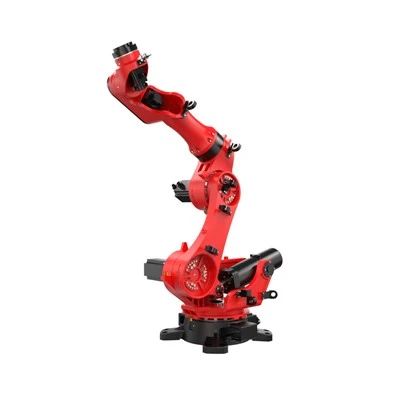
First, let’s start with the core definition: a pick and place cobot is a collaborative robot designed specifically for the repetitive, precise task of picking items from one location (think a bin, a conveyor belt, a tray, or even a small parts feeder) and placing them in another. Unlike traditional industrial robots, which are built for high-speed, high-volume work in large-scale factories, pick and place cobots are built to work safely alongside human employees, no heavy fencing or restricted work cells required. That’s the “collaborative” part of cobot—short for collaborative robot—something that sets them apart from every mechanical arm that came before them.
But let’s get more specific than that, because not every cobot does pick and place. Some cobots are built for assembly, others for welding, even a few for packaging or lab work. Pick and place cobots are tailored for speed, accuracy, and adaptability when it comes to moving parts, which makes them one of the most versatile and widely deployed cobot types on the market right now. For context, the International Federation of Robotics (IFR) reports that pick and place applications make up nearly 30% of all cobot installations globally, and that number has stayed steady for the last five years as more companies discover how simple it is to integrate these machines into existing workflows.
What makes a pick and place cobot different from a traditional pick and place industrial robot? Let’s list the key differences that matter for a shop owner, a line supervisor, or a small business owner trying to scale:
Safety is the big one. Traditional industrial robots can exert thousands of Newtons of force, enough to cause serious injury if a human strays into their path. They’re almost always surrounded by metal fencing, light curtains, or pressure mats to prevent access. Pick and place cobots, by design, have built-in force and torque sensors in every joint. If the arm bumps into a human or an unexpected obstacle, it automatically stops within milliseconds—usually in less than a tenth of a second. Some newer models even have vision systems that let them detect human presence near the work area and slow down or adjust their path to avoid contact. That’s why you’ll see a pick and place cobot loading parts onto a conveyor next to a line worker packing finished products, no fence separating them.
Flexibility is another huge differentiator. A traditional industrial robot is programmed to do one specific task, and changing that program or retooling it for a new part can take days, if not weeks, with specialized technicians. Pick and place cobots, on the other hand, are designed to be easy to reprogram by non-technical staff. Most modern models use “lead-to-teach” functionality: you can grab the arm, move it through the sequence of picking a part and placing it in the next location, and the cobot records that path automatically. For simple tasks, you can reprogram a pick and place cobot in 15 minutes or less. That’s a game-changer for small batches, product lines that change frequently, or operations that need to shift tasks on a whim. We’ve had a customer who runs a custom electronics shop re-program their pick and place cobot three times in a single day to support three different product runs—something that would have been impossible with their old industrial robot.
Cost, too, plays a big role. Traditional industrial robots can cost $50,000 to $150,000 upfront, plus thousands more in installation, safety fencing, and annual maintenance. A pick and place cobot, by contrast, typically ranges from $15,000 to $50,000, with far lower installation costs (no fence required, usually) and lower ongoing maintenance. For small and mid-sized businesses that might not have six figures to invest in automation, a pick and place cobot is often the only feasible way to automate repetitive tasks. Even for larger companies, these cobots make sense for secondary tasks that don’t need the speed or strength of a full industrial robot.
Now, what do pick and place cobots actually do? Let’s run through common use cases to make this tangible, because it’s not just “picking and placing parts.” For automotive suppliers, a pick and place cobot might pick plastic fasteners from a bin and place them on a car door frame before assembly. For e-commerce fulfillment teams, a pick and place cobot might pick small items (like phone chargers, books, or jewelry) from a sorting tray and place them into a shipping box, or stack boxes on a pallet. For food and beverage operations, they can pick packaged snacks from a conveyor and place them into retail displays, as long as they’re paired with food-grade grippers. Even in medical device manufacturing, pick and place cobots can move tiny, sensitive components (like insulin pen parts) without damaging them, something that’s hard to do with manual labor over long shifts.
One of the most underrated benefits of pick and place cobots is how they handle small, high-mix parts. A human worker can get bored and fatigued after hours of picking tiny connectors, leading to mistakes or dropped parts. A pick and place cobot can repeat the same motion 24/7 with micron-level accuracy, reducing error rates by up to 90% in some cases, per IFR data. That not only cuts down on waste from defective parts, but it also frees up human workers to do higher-value tasks that require problem-solving, creativity, or social interaction—like troubleshooting line issues, training new hires, or customizing orders. I had a conversation with a line supervisor at a consumer goods company last quarter who told me their pick and place cobot had cut their part error rate from 1.2% to 0.1% in the first six months, and their line workers were no longer complaining about sore hands from repetitive motion. That’s the kind of return on investment that matters more than numbers on a spreadsheet.
Of course, pick and place cobots aren’t perfect, and it’s important to be honest about their limitations, which is something I always tell potential customers. They’re not built for heavy lifting—most models can handle between 1 and 20 kilograms, with a top end of around 50 kg for the largest industrial-grade pick and place cobots. They’re also not ideal for tasks that require high speed at scale: a traditional industrial robot can pick and place parts 3 to 5 times faster than a cobot, so for a 10,000 unit per day high-volume run, a cobot might not be the right fit. But for most operations, especially those with variable demand or runs of 1,000 units or less, those limitations are negligible compared to the benefits.
Another common question I get is: how do you integrate a pick and place cobot into an existing workflow? The good news is that most pick and place cobots are built to work with standard factory equipment—conveyors, parts feeders, vision systems, and even shipping software. For example, if you already use a conveyor to move parts, you can connect your cobot to that conveyor so it knows when a part is in position to pick. If you need to sort parts by size or color, you can add a low-cost 2D or 3D vision camera to the cobot, which lets it identify different parts and pick the right one, no custom programming required. We work with a team of integration specialists who can help you match the cobot to your specific parts and workflow, so you don’t have to build a system from scratch.
A lot of people still think automation is just for big companies with deep pockets, and that’s simply not true anymore. A pick and place cobot can pay for itself in 12 to 24 months for most small businesses, according to a 2024 report from the Collaborative Robotics Association, because it reduces labor costs from repetitive tasks, cuts waste, and lets you scale without hiring extra staff for high-demand periods. For example, a small apparel manufacturer in our area added a pick and place cobot to pack finished t-shirts into poly bags; they were spending $18 an hour on manual packers, and the cobot did the same work for 10% of that cost, paying for itself in just 18 months.
I also want to address the elephant in the room: do pick and place cobots take jobs? The answer, from every customer I’ve worked with over the last seven years, is no—they change jobs. We’ve seen line workers who were doing repetitive picking and place work move up to roles as cobot technicians, troubleshooting minor issues, updating programs, and training other workers. At the same time, small business owners tell me they couldn’t take on new contracts because their existing workers were already stretched thin on repetitive tasks; adding a pick and place cobot let them grow their team and take on more work, leading to more jobs, not fewer. That’s a narrative I wish more people talked about: automation isn’t replacing workers, it’s augmenting them.
So, to circle back to the original question: what is a pick and place cobot? It’s a flexible, safe, accessible automation tool built to handle the repetitive, precise tasks that drain human time and energy, without the cost, complexity, and safety risks of traditional industrial robots. It’s not a replacement for human workers—it’s a tool that works alongside them to make work easier, more accurate, and more valuable.
If you’re a business owner, line supervisor, or operations manager looking to cut error rates, reduce labor costs, or scale your operations without hiring extra staff, a pick and place cobot might be the right solution for you. Every operation is different, so we work with you to assess your current workflow, identify the right cobot model and accessories (like grippers or vision systems) for your parts, and get you up and running in days, not weeks. Our team is here to answer all your questions, no sales pitch required, and help you figure out if a pick and place cobot is a fit for your team.
If you’d like to learn more or schedule a consultation to discuss your specific needs, we’re here to help.
Palletizing Robot References
International Federation of Robotics (2024). Global Collaborative Robot Market Report.
Collaborative Robotics Association (2024). ROI Analysis for Small Business Cobot Deployments.
Robotics Industries Association (2023). Safety Standards for Collaborative Robot Workcells.
Robotic Technology (GD) Co., Ltd.
Robotic Technology (GD) Co., Ltd. is one of the most experienced cobot manufacturers and suppliers in China, also supports custom service and one year warranty. Please feel free to wholesale CE approved cobot for sale here from our factory. Contact us for quotation.
Address: Room 102, No. 30,Hengfeng 2nd Road,Daguo, Changping Town, Dongguan City,Guangdong,China
E-mail: admin@iroboticplus.com
WebSite: https://www.rb-tic.com/
