If you’re running a cut-to-length line (CTL line) at your metal service center, fab shop, or heavy manufacturing plant, you know how much downtime one tiny glitch can cost. I’ve been on the vendor side of CTL lines for over a decade, dealing with headaches from operators who call at 2 a.m. because their line isn’t cutting straight, or it’s stacking sheets wrong, or it’s just completely dead mid-run. More often than not, the problem isn’t a total line failure—just a small, easy-to-miss issue that can get fixed without waiting for a $$$ service call or panicking that you’ll miss a delivery deadline. Let’s break down the most common CTL line issues we see every day, how to troubleshoot ‘em fast, and when to hit us up if you need real support. Cut To Length Line
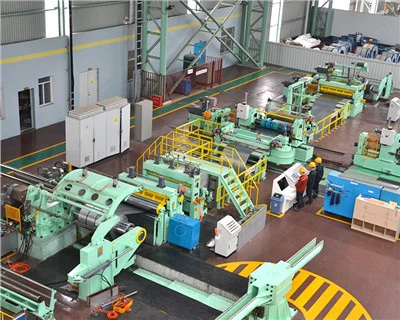
First off, let’s start with the basics: what even is a CTL line for? For anyone new (or just stuck troubleshooting at 2 a.m.), it’s that long setup that takes coiled metal—steel, aluminum, copper, whatever—and feeds it through machines that straighten it, cut it to your exact length, and stack it neatly. It’s a huge time saver, but because it’s a series of interconnected parts, one misaligned thing throws the whole sequence off. No joke: I’ve seen a $50k coil of aluminum get ruined because the operator didn’t check one tiny guide roller. Let’s dive into the first super common issue: crooked cuts. This is the #1 call we get, no lie. Most people think it’s the shear blade, but 9 times out of 10, it’s upstream.
Wait, let’s specify: crooked cuts are when your sheet comes out longer on one end than the other, or it’s skewed so bad it won’t stack straight. First step, grab a tape measure and a straight edge (like a steel rule, not a random board from your shop floor). Measure the edge of the sheet right after it exits the straightener, before it hits the shear. If that edge is already wonky, the problem is in the straightener or the entry guides, not the shear. Super easy to fix: check the entry guide rollers. Those are the little round wheels that hold the coil tight as it feeds into the line. A lot of times, they get out of alignment because of vibration from running heavy coils, or even just normal wear. If one roller is ¼ inch off, that’s enough to skew the entire sheet. How to check? Run a test sheet 10 feet through the line, stop it, and see if it’s centered between the side guides. If it’s drifting left, adjust the left entry roller inward a little, vice versa. Also, make sure the coil itself isn’t wound off-center. I’ve had coils from crappy suppliers that are 2 inches narrower on one side, and if you don’t adjust the guides to match, you get crooked cuts. That’s a free fix, no tools needed besides a tape measure.
If the straightener edge is straight, then the shear is the culprit. Check the shear blades first. Dull blades, or blades that have a tiny nick from hitting a piece of scrap, will cause the sheet to twist as it’s cut, leading to skewed parts. How to check? Run a scrap piece through, and look at the edge of the cut. If it’s jagged instead of smooth, that’s dull blades. Don’t just sharpen them immediately—make sure the blade gap is set right too. For mild steel, the gap should be about 5% of the material thickness. If you run 1/4 inch steel with a gap that’s too big, the sheet will bend during the cut, making it crooked. Too small, and you’ll break the blades. We usually send a quick cheat sheet to all our clients with gap specs based on material, but if you lost it, just shoot us a message and we’ll send it right over—no hoops to jump through.
Next up: stacking issues. This is another big one. You’ll see sheets stacking lopsided, or they’re not square, or they’re getting jammed between the stacker arms. Most people blame the stacker, but again, upstream is usually the problem. Let’s say you’re stacking 10 gauge steel, and each sheet is off by a quarter inch. That’s not the stacker’s fault—your length measurement is wrong. CTL lines use encoders to measure how far the sheet has fed, right? Those encoders are usually on the pull rolls (the rollers that pull the sheet through after the straightener). If the encoder is dirty, or the pull rolls are slipping because they’re covered in metal shavings, the measurement will be off. How to test this? Mark a spot on the sheet before it goes into the pull roll, measure the distance from that spot to the cut edge when it exits. If it’s not the length you set (say you set 48 inches, and it’s coming out 47.5), clean the encoder wheel and the pull rolls first. Metal shavings build up fast, especially when running aluminum, and that makes the roll slip. Also, check if the pull roll pressure is set right. If it’s too loose, it slips; too tight, it will stretch the sheet, leading to length errors. For thin material (like 16 gauge aluminum), you want lighter pressure; thick material, heavier. I see operators crank the pressure all the way down just because, and that’s a quick fix that stops length errors.
Another stacking issue: sheets sticking together. This is super common with shiny aluminum or stainless steel. They pick up static, or just have leftover lubricant that makes them stick. If two sheets stick, the stacker will get jammed, and you’ll have to clear it, wasting 20 minutes of downtime. How to fix this? First, check your anti-static blowoff nozzles. Those are the little air guns that blow air between the sheets as they exit the shear. Make sure they’re not clogged with shavings. A clogged nozzle blows weak air, so the sheets stick. We recommend checking those every shift—just a quick blast with compressed air, or a tiny wire to clear the tip if it’s gunked up. Also, if you run a lot of shiny material, you can adjust the lubricant amount on the entry side. Too much lubricant makes sheets slick and sticky; too little, and you get scratches. We usually send our clients a nozzle cleaning tool when we set up the line, but if you lost it, just ask.
Now, let’s talk about the big one: total line shutdown. Like, the line stops dead in the middle of a coil, no error message. No, I’m not talking about a power outage—though that happens too. Most of the time, it’s a photo eye issue. Photo eyes are those little sensors that detect the sheet as it moves through the line, to tell the encoder when to stop for the cut, or to trigger the stacker. They get covered in metal shavings, dust, or even lubricant, so they can’t “see” the sheet. I’ve had operators call me in a panic because the line stopped, and when I walk in, the photo eye on the shear is just covered in aluminum dust. That’s a 2-minute fix: wipe the sensor with a clean rag, and boom, it works again. Pro tip: label all your photo eyes with a cleaning reminder on the control panel. Operators will forget, but a little sticker that says “WIPE PHOTO EYES EVERY SHIFT” works way better than you reminding them at 3 a.m.
Another common shutdown issue: misaligned safety guards. A lot of CTL lines have safety interlocks on the shear and stacker, so if a guard is open or misaligned, the line won’t run. I once had a client who moved a stacker arm last week, and when they put it back, they didn’t line up the interlock switch. The line would power on but not run—they spent 2 hours calling electricians before I showed up and noticed the switch was just ¼ inch out of place. That’s a stupid, easy mistake, but it happens all the time. If your line won’t start, first check all the safety guards—make sure they’re closed, and the interlock pins are seated properly. Don’t skip this step; I’ve seen crews hack the interlocks to get the line running, which is a huge safety hazard, and a bad idea.
Wait, let’s not forget about maintenance stuff that prevents all these issues. A lot of operators think “if it runs, don’t touch it,” but that’s how you get a $10k repair bill when a bearing seizes. We recommend a daily check: wipe down photo eyes, check entry guides for alignment, clean pull rolls. Weekly: tighten loose rollers, check blade gap, blow out the control panel with compressed air (dust in the panel causes electrical glitches that lead to random shutdowns). Monthly: lubricate the bearings on the straightener and stacker arms. I know, maintenance is a pain, but we’ve had clients who skip it and end up with 3 days of downtime, which costs way more than the 1 hour a month it takes to do the checks.
Now, when should you call us, instead of troubleshooting on your own? If you’ve gone through all these steps and the line is still messing up, or if you need to upgrade parts (like new blades, or updated encoders for faster runs), or if you’re looking to increase your line’s speed to keep up with orders. We’re not just the guys who sell you the line—we’re the guys who’ve fixed every problem under the sun, and we can send a remote diagnostic over (or a tech, if you’re local) to get you up and running fast. No hidden fees, no upsells, just straight-up help. If you’re thinking of upgrading your CTL line, or need support with a current one, just reach out to us to talk through your needs.
Wait, let me add a quick real example to make this relatable. Last month, a client out in Ohio called me at 1 a.m. because their line was cutting 1/2 inch too long on every sheet. They’d checked the blades, the guides, everything, and couldn’t figure it out. I asked them to check the encoder, and turns out, the encoder wheel had a tiny piece of metal shavings stuck between it and the shaft, so it was slipping. They blew it out with compressed air, and the line ran perfectly for the rest of the shift. That’s the kind of tiny, easy-to-miss thing that trips everyone up.
Another pro tip: keep a spare set of common parts on hand. I see a lot of small shops only have spare blades, but you should have spare photo eyes, a few guide rollers, and extra encoder wheels. If a photo eye goes bad, you don’t have to wait 3 days for a shipment—swap it out in 5 minutes and get back to running. It’s a small cost that saves way more in downtime.

One last thing: don’t ignore weird sounds. If the line is making a grinding noise when it feeds, or a high-pitched squeal from the shear, that’s not normal. A grinding noise could be a worn bearing, which if you fix it now, is a $50 part. If you ignore it, the bearing seizes, and you have to replace the whole straightener shaft, which is $2k. Trust me, I’ve seen it. Listen to the line when it runs—you know what it sounds like when it’s working, so a weird noise means stop, troubleshoot, fix it.
Slitting Lines So to wrap this up: most CTL line issues are small, preventable, and easy to fix without calling a service tech at 2 a.m. Check entry guides, clean photo eyes, watch for misaligned parts, and stay on top of basic maintenance. If you’ve tried all that and still have problems, or if you’re looking to buy a new CTL line that’s built for your specific material and production needs, hit us up to connect. We’re here to help you keep your line running, not just sell equipment.
References
- Metal Service Center Institute. "Cut-to-Line Operation and Troubleshooting Guide". 2021.
- Groover, M.P. "Fundamentals of Modern Manufacturing: Materials, Processes, and Systems". 7th ed. Wiley, 2020.
- American Society of Mechanical Engineers. "Safety Standards for Metal Forming and Fabrication Equipment". 2022.
- Our team’s 12+ years of hands-on CTL line support data.
Shanghai HOYO Industries Co., Ltd.
Shanghai HOYO Industries Co., Ltd. is one of the most professional cut to length line manufacturers and suppliers in China, featured by quality products and competitive price. Please rest assured to buy cheap cut to length line for sale here from our factory. Contact us for customized service.
Address: No.9, Jianding Road, Fengjing Town, Jinshan District, Shanghai, China
E-mail: info@hoyomachinery.com
WebSite: https://www.hoyomachinery.com/
