If you’ve ever stood in the middle of a blackout—whether it’s your home’s power cutting out during a brutal winter storm, a small business losing mid-afternoon productivity, or a construction site that can’t afford to pause work because the sun went down—you’ve probably heard someone say, “Thank goodness we’ve got the generator running.” But what most people don’t stop to ask is: what is that thing, exactly? And how does it actually turn something as simple as a tank of diesel or a stream of natural gas into the power that keeps your lights on, your fridges cold, and your tools running? Generator Set
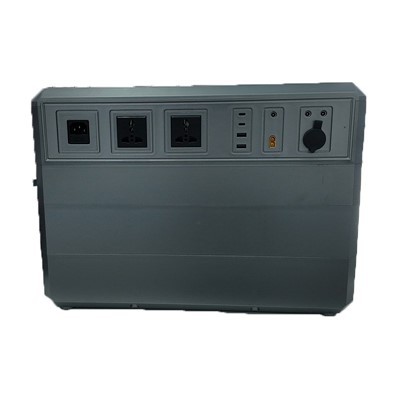
I’ve been selling generator sets for over 12 years now, and let me tell you, most of the questions I get from new customers aren’t about technical specs first—they’re about basics. “Is that the same thing as a portable generator?” “Can it power my whole house, or just the fridge?” “Why does some cost three times as much as another that looks similar?” Before we dive into all that, let’s start with the core definition, because “generator set” is a specific term that’s often thrown around loosely. A generator set—shortened to genset, and what we call it every day around the warehouse—is a complete, self-contained system designed to produce electrical power. It’s not just a random engine hooked to a wire; it’s a matched pair of two main parts: a prime mover (that’s the engine that generates mechanical energy) and an alternator (the part that turns that mechanical energy into usable electricity). It also includes all the supporting parts you don’t see at first: a fuel system, a cooling system, an exhaust system, a control panel, and a frame to hold it all together. Every genset is built for a specific job—so when I’m talking to a customer, the first thing I ask is what they need it for, because that dictates every other choice.
Let’s break down how that works, step by step, because it’s way simpler than it sounds once you strip away the jargon. First, you need a source of energy to kick the whole thing off. Most gensets you’ll see run on diesel, natural gas, or propane, but there are also newer models that run on biogas for eco-conscious operations or even solar for smaller, portable units. When you turn the key (or press the auto-start button, which most permanent gensets use), the fuel feeds into the engine’s combustion chamber. The engine isn’t running to “make power”—it’s running to spin a shaft really fast, at a steady, constant speed. For most standard gensets used in residential, commercial, or industrial settings, that speed is 1,800 rotations per minute (RPM) for 60-cycle power (that’s the power standard in the U.S. and Canada) or 1,500 RPM for 50-cycle power, which is common in most other countries. That steady speed is non-negotiable; if it’s off, the power coming out is too, and you could fry sensitive electronics like laptops, medical equipment, or office servers.
Now, that spinning shaft connects directly to the alternator—this is the magic part. The alternator has two main components: a rotor (the spinning part, connected to the engine shaft) and a stator (the stationary part wrapped around the rotor, like a sleeve). The rotor has small electromagnets, and once the engine starts spinning it, a tiny amount of electrical current is sent to those magnets to turn them into electromagnets (this is called excitation, and it’s why alternators don’t need separate permanent magnets that wear out over time). As the rotor spins, that magnetic field moves past the copper wires in the stator. That movement of a magnetic field through conductive wire is the exact principle of electromagnetic induction, discovered by Michael Faraday back in 1831. The spinning magnetic field pushes electrons in the stator’s copper wires, and that flow of electrons is what we know as electricity—either alternating current (AC, which is what powers most standard outlets) or direct current (DC, used for things like small electronics and some specialized equipment).
But a genset can’t just run on its own, right? There’s a whole support system keeping it reliable, which is why we never sell “just an engine and an alternator” to customers. Let’s go back to the diesel example to make this concrete. Once the combustion starts, the engine gets hot—way too hot to run if it’s not cooled. Most gensets have a liquid cooling system, like a car’s radiator, that circulates coolant through the engine to keep temperatures steady. Exhaust fumes have to go somewhere, so there’s a heavy-duty exhaust pipe that vents fumes safely away, often with a muffler to cut down on noise. The fuel system has a built-in filter to keep dirt or debris out of the engine—dirt is one of the biggest causes of genset breakdowns, so we always make sure customers understand regular filter changes are non-negotiable for long life. And then there’s the control panel, which is the brains. It’s got a digital display that shows you how much power you’re using, how much fuel is left, what the engine temperature is, and if there’s a problem. For permanent standby gensets, it has an automatic transfer switch (ATS)—that’s the part that makes it work without you even touching it. When the main grid power cuts out, the ATS detects that drop in power in as little as two seconds, signals the genset to start, waits a few seconds for the engine to warm up and stabilize, and then switches your home or building over to the genset’s power. When grid power comes back, it switches you back and shuts the genset down automatically. That ATS is worth every penny, in my opinion—most residential customers who skip it end up regretting it when they’re fumbling to start a portable genset in the middle of a snowstorm in the dark.
Now, you might be wondering why some gensets are small, portable ones you can wheel behind an SUV, and others are big enough to power an entire hospital or a factory that makes car parts. That comes down to the rating, or capacity, of the genset, measured in kilowatts (kW) or kilovolt-amperes (kVA). Portable gensets are usually 1 kW to 25 kW—enough to power a few appliances during a short blackout, like a fridge, a space heater, and a few lights. Industrial standby gensets, on the other hand, can be 1,000 kW or more—enough to power every piece of equipment in a 10-story office building, the elevators, the emergency lighting, and even the server farms that keep businesses running. We see a lot of demand for that size from data centers now, which can’t afford even a 10-second power outage—those businesses will pay top dollar for gensets that start in under two seconds and run non-stop for days.
I want to be honest here, though—gensets aren’t perfect, and they aren’t for every situation. A lot of people buy a portable genset to use at a campsite, which works, but running it inside a garage or a closed space is a huge safety risk—carbon monoxide poisoning is a real, deadly danger. That’s one of the first safety tips I give every customer, no matter what they’re using the genset for. Also, gensets burn fuel, so they do produce emissions, which is why we’ve been pushing hard for more efficient, low-emission models over the last few years. For customers who need power long-term—like off-grid cabins or construction sites that are far from the grid—we also offer parallel connection, which lets you link two or more gensets together to get even more power, or switch one off for maintenance without losing power.
Over the years, I’ve helped customers with every kind of genset need: a small café owner in Ohio who wanted a 10 kW genset to keep their espresso machine and walk-in fridge running during summer storms, a hospital in rural Texas that needed a 2,000 kW unit to cover all critical care areas, a construction company that needed a portable genset for a bridge project in the mountains. The thing I’ve learned most is that gensets are more than just pieces of equipment—they’re peace of mind. A blackout doesn’t just mean no TV or lights; it can mean a small business loses thousands of dollars in spoiled food, a hospital can’t run life-saving equipment, a family has to sleep in the dark and cold during a winter storm. That’s why when a customer calls, I don’t just throw specs at them—I ask questions: how long do you need to run it for? How much power do you actually use, not just what you think you need? Is it for emergency standby, or for off-grid use? Do you have space for a permanent unit, or do you need something portable? Those answers help me point them to the right genset, not just the most expensive one.
If you’re in the market for a generator set, whether it’s your first one or you’re replacing an old unit, it’s important to work with someone who knows the ins and outs, not just the sales pitch. We’ve been in this business long enough to know that a genset is a long-term investment, not a quick buy—cutting corners on quality or sizing usually leads to headaches down the line. Whether you need a small portable unit for occasional use, a permanent standby for your home or business, or a large industrial unit for heavy-duty work, we can help you find the right solution for your needs and budget. We also offer maintenance plans to keep your genset running smoothly for years, because even the best genset will break down if you don’t take care of it.

If you’re ready to talk through your requirements, or just have questions about generator sets, don’t hesitate to reach out and start the conversation. We can walk you through the different types, sizing, fuel options, and anything else you need to know to make the right choice for your power needs.
Portable Mobile Energy Storage System References
- Giampaolo, T. (2015). Gas and Diesel Generators: Selection, Application, and Maintenance. Fairmont Press.
- DOE. (2022). Generator Safety and Use. U.S. Department of Energy.
- Electrical Safety Foundation International. (2021). Standby Generators: A Guide for Homeowners. ESFI.
- Miller, R. (2019). Alternator Design and Application for Power Generation. CRC Press.
Shandong Yaoqian Energy Storage International Trade Co., Ltd.
We’re well-known as one of the leading generator set manufacturers and suppliers in China, featured by quality products and good price. Please rest assured to buy customized generator set made in China here from our factory.
Address: Lithium Battery Industrial Park, Xingcheng Street, Zaozhuang High-tech Zone, Shandong Province, China
E-mail: business@yaoqiansmart.com
WebSite: https://www.yaoqiansmart.com/
