If you’ve ever stared at a half-empty roll of blank self-adhesive labels tucked in a desk drawer, or stayed up late scrambling to print shipping labels for a small order before the courier cuts off, you’ve probably asked this question: Can I print self-adhesive labels at home? As a self-adhesive labels supplier who’s spent the last 12 years troubleshooting with everyone from Etsy sellers to start-up founders, I get this question at least once a week—and not just from people who’ve run out of professional labels last minute. A lot of folks see self-adhesive labels as a one-size-fits-all product, assuming home printing will work for everything, or that commercial label printers are a necessary splurge. The truth is, it’s not a yes or no answer. It depends on what you’re printing, what printer you own, and how much time and money you’re willing to invest. Today, I’m breaking down the real-world, not-too-salesy details of printing self-adhesive labels at home, from my years of working with small business owners who swear by home printing and others who end up calling our team for custom bulk orders because their at-home attempts went sideways. Self-adhesive Labels

Let’s start with the basics: what makes a label “self-adhesive,” and why that matters for home printing. Self-adhesive labels aren’t just paper with sticky glue on the back. They’re a three-part structure: a face stock (the part you print on, whether that’s paper, vinyl, polyester, or something else), an adhesive layer (the sticky part that bonds to whatever you’re sticking the label to), and a liner (the protective backing you peel off before applying the label). For commercial label suppliers, we source face stocks matched to specific adhesives—high-tack adhesive for shipping labels that won’t fall off a box in the rain, removable adhesive for jar labels you want to take off without leaving residue, UV-resistant vinyl for product labels that sit on a store shelf all summer. Home printers, though, were designed for plain paper, glossy photo paper, or cardstock, not the varied face stocks and adhesives that make a label work for a specific purpose. That’s the first big hurdle most people don’t think about when they grab a pack of generic blank self-adhesive labels from the office supply store.
I see this most often with small business owners who run Etsy shops selling handmade candles or skincare. Last month, a customer named Mia reached out to our team panicking—she’d spent three nights printing custom jar labels at home, only for half of them to smudge, peel off mid-shipment, or curl up at the edges after a week on the shelf. “I used the same inkjet printer I use for wedding invitations,” she told me, “and the labels were $15 for a pack of 100, so I thought I was saving money.” The problem? Generic self-adhesive labels sold for home printers are almost always made with cheap, uncoated or thinly coated paper face stock. If you print with an inkjet printer, the ink sits on top of this thin coating instead of being absorbed, so it smudges if it gets even a little damp—like if a customer opens a jar of lotion on a humid day, or a shipping box sits in a thunderstorm. For laser printers, the toner melts onto the label face with heat, and the cheap paper can’t handle that heat, so it warps or frays, making it impossible to line up for printing.
That said, home printing isn’t impossible—for specific use cases. Let’s be honest: if you need 20 shipping labels for a small side hustle order, or address labels for a holiday card list, home printing works fine. The key here is using the right type of labels for your printer. Laser-compatible self-adhesive labels are made with thicker, heat-resistant face stock that can handle the heat of a laser printer’s fuser without warping. I recommend buying labels specifically labeled for your printer type, not just “self-adhesive labels”—the packaging will say “inkjet compatible” or “laser compatible,” which is a tiny detail that makes a huge difference. For shipping labels, there are also perforated inkjet shipping labels that work surprisingly well for small volumes, though I still warn people to stick them to plain paper or cardboard for extra durability if the package is going cross-country.
But here’s where home printing starts to fall short for most growing businesses: consistency and durability. When we produce bulk self-adhesive labels, we use industrial printers that apply adhesive evenly across every single label, cut them to exact size every time, and use face stocks matched to the adhesive for your specific needs. A home printer, even a high-end one, can’t match that consistency. I had a customer last year who printed custom product labels for his new line of organic coffee at home, and sold 50 bags before realizing that 12 of the labels were slightly misaligned, so the barcodes didn’t scan at the grocery store where he was stocking them. He ended up having to re-label all 50 bags at his own cost, which cost him hundreds of dollars in lost time and product—way more than it would have cost to order a custom batch from us upfront.
Durability is another big one. If your labels need to hold up to moisture, UV light, or extreme temperatures, home printing just can’t compete. We offer vinyl and polyester self-adhesive labels that are water-resistant, tear-proof, and UV-stabilized, which means they won’t fade or peel after months in direct sunlight, or get ruined by a splash of soda or rain. Generic home labels are almost always paper-based, so they’ll break down if they get wet, and the ink will fade within a few months of being exposed to sunlight. I once had a craft beer brewery client tell me he printed his labels at home for the first few batches, only to have 30% of the labels on bottles left on a patio for a weekend fade so bad that you couldn’t read the beer’s name—costing him a $2,000 catering order because the customers couldn’t tell what beer they’d ordered.
There’s also the hidden cost of home printing that most people don’t calculate. A pack of 100 generic self-adhesive labels will set you back $10 to $15, which works out to 10 to 15 cents per label. But if you’re printing low volumes, you’re often throwing away half the labels because they’re misaligned, smudged, or warped. Plus, ink for home printers is notoriously expensive—replacement ink cartridges can cost $50 or more, and if you’re printing labels frequently, you’ll go through ink a lot faster than you would printing plain documents. When you order custom bulk labels from a supplier like us, you pay a per-label price that’s often lower than 10 cents per label, even for small orders of 500, and you don’t have to deal with wasted labels or running out of ink mid-print.
Wait, but what about label printers? A lot of people confuse regular home printers with dedicated label printers. Dedicated label printers, like the ones made by popular brands, are designed specifically for printing self-adhesive labels, so they handle the paper, adhesive, and cutting perfectly every time. But these printers aren’t cheap—entry-level models start at $200, and high-end ones for small businesses cost $500 or more. Plus, they only print on specific label sizes and face stocks, so if you need a custom-sized label for a uniquely shaped product, a dedicated label printer won’t work. For someone who only prints shipping labels once a month, that $200 printer is a big investment that might not pay off. But if you’re printing labels daily for a growing business, it could be worth it—just make sure you get a printer compatible with the label sizes and types you need, and that you’re using high-quality blank labels made for that printer.
I should also mention the common mistakes I see people make when trying to print self-adhesive labels at home, because these are avoidable and usually lead to the label failures everyone blames on “bad labels.” First, don’t use regular printer paper with adhesive stickers on the back—those are not the same as self-adhesive label stock, and the adhesive will often come off mid-print or leave a residue in your printer. Second, don’t overload your printer’s paper tray with labels—this causes misalignment and paper jams, which can ruin dozens of labels at once. Third, let the ink or toner dry fully before peeling labels off the liner, especially if you’re using inkjet labels. I’ve seen people peel labels right after printing, only to smudge the ink and ruin an entire sheet, because they’re in a hurry.
So, to circle back to the original question: Can self-adhesive labels be printed at home? The short answer is yes, but only for specific, low-stakes use cases. If you need 20 address labels for your holiday cards, or 15 shipping labels for a small one-time side order, home printing works fine—as long as you use printer-compatible blank labels, take your time with alignment, and let the ink dry. But if you’re running a small business, selling products that need to last, printing more than 50 labels a month, or need custom sizes or special features like water resistance or UV protection, home printing will end up costing you more time, money, and headaches than it’s worth.
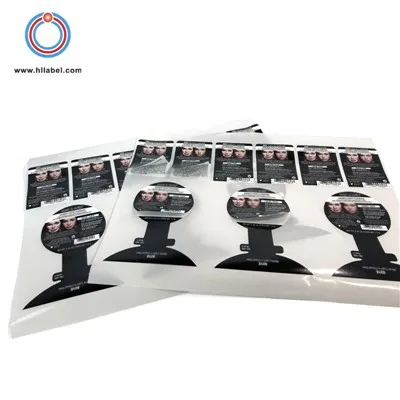
That’s where we come in as a self-adhesive labels supplier. We’ve worked with thousands of small business owners to get labels that work for their specific needs—whether that’s custom-sized product labels for a new skincare line, waterproof shipping labels for e-commerce sellers, or removable labels for a line of seasonal candles. We test every batch of labels to make sure the adhesive sticks, the ink (or our custom printed designs) looks crisp, and the labels hold up to whatever environment they’re going to be in. We also work with businesses of all sizes, from side hustles printing 50 labels a month to national brands printing hundreds of thousands of labels, so you don’t have to order a huge bulk if you don’t need it.
Multi-layer Labels If you’re tired of printing labels at home and dealing with smudges, misaligned barcodes, or labels that peel off before they reach your customer, we’d be happy to talk through your needs. Whether you’re not sure what face stock works best for your product, need a custom label design, or just want a quote for your first bulk order, our team is here to help.
References
- National Association of Printing Ink Manufacturers. (2021). The Science of Label Adhesion for Commercial and Home Printing.
- Small Business Administration. (2022). Cost-Benefit Analysis of In-House Label Printing vs. Outsourcing for Small E-Commerce Businesses.
- Packaging Association. (2020). Durability Standards for Self-Adhesive Labels in E-Commerce and Retail Applications.
Huizhou Huilong Printing Company Limited
As one of the most professional self-adhesive labels manufacturers in China, we have world-leading production equipment and strong manufacturing capabilities. Please feel free to buy bulk self-adhesive labels in stock here from our factory. Also, pricelist is available.
Address: Xin’er Group, Xiamazhuang, Huicheng District, Huizhou City, Guangdong Province
E-mail: huilong278@163.com
WebSite: https://www.huilonglable.com/
