Hey everyone, quick heads up for anyone shopping around for air circulator fan heaters — especially if you’re based way up in the mountains or planning a high-altitude trip. I know, I know — when you’re dealing with places that are 5,000+ feet above sea level, regular heaters hit a wall fast. The air’s thinner, oxygen levels are lower, and your average off-the-shelf fan heater can’t keep up because it’s calibrated for sea level pressure. So let’s cut through the noise: are there actually air circulator fan heaters with a high-altitude mode? Spoiler: yes, and I’ve been deep in this space as a supplier for years, so I’ve tested my fair share of duds and gems. Air Circulator Fan Heater

First, let’s get real about why regular heaters suck at altitude. Let’s break this down simple (no engineering degree required). Heaters work by heating air, right? At sea level, the air’s dense — more molecules packed into every cubic foot. When a regular fan heater blows that air over its heating element, it’s moving enough dense air to carry consistent heat. But up at, say, 8,000 feet (that’s common in places like Denver, Flagstaff, or parts of the Rockies), air is about 20% less dense. That means fewer air molecules, so the same heater has less “stuff” to heat. Most standard models crank up the wattage to compensate, but that just makes them run too hot, cycle on and off like crazy, and waste energy. Worse, they can’t distribute heat evenly because the thin air doesn’t hold that warmth. I’ve had customers come to me complaining their old heater heats half the room then dies — that’s exactly why.
Now, what’s a high-altitude mode actually supposed to do? It’s not some random marketing buzzword, I promise. Good high-altitude tech adjusts two key things automatically: fan speed and heating element output, based on local barometric pressure. When a heater detects lower pressure, it ramps up the fan to move more air (even if each molecule is lighter) so it circulates the warmth further and faster. It also tweaks the heating element to work smarter — not harder — so it doesn’t overheat or short-cycle. A lot of people mix this up with just “higher wattage,” but no — that’s a waste and can be unsafe. The best high-altitude modes are adaptive, which is why my team prioritizes that feature in every unit we stock.
Wait, but how do you spot a real high-altitude mode vs. a fake one? Because lately everyone’s slapping “altitude-ready” on products that don’t do squat. Red flags to watch for: if the manufacturer just says “works at altitude” without explaining pressure adjustment, that’s a scam. A real high-altitude mode will either have a built-in barometer that auto-calibrates, or a manual setting to input your elevation (like a little dial that goes from “0-3k ft” to “8k+ ft”). I’ve seen so many customers buy those cheap Amazon heaters with a fake “altitude mode” and end up frustrated because they still freeze at 7,000 feet. Don’t do that to yourself — ask the supplier (yep, me and my team) point blank: does this adjust fan speed and heat output based on pressure? If the answer is no, walk away.
Let’s talk about real-world results, because numbers don’t lie. Last winter, we sent a batch of our high-altitude circulator fan heaters to a cabin in Breckenridge, CO, which sits at 9,600 feet. The owner was using a 1,500W standard heater before — it took 3 hours to warm up the 600 sq ft main room, and they were still wearing socks indoors. Switched to our model with high-altitude mode, and guess what? 45 minutes to get the room to 72 degrees, and the fan circulates the heat all the way to the back bedroom. No more dry air either, because it’s not cranking wattage unnecessarily. Another test: a lodge in Yellowstone that’s at 7,500 feet — they bought 12 units for their guest rooms, and maintenance reported a 30% drop in energy bills because the heaters work more efficiently at altitude instead of wasting power.
A lot of people ask me: “Why can’t I just buy a standard heater and adjust it?” Nope, that’s not how it works. The pressure change is too significant. A standard heater’s fan is tuned for sea level air density — if you crank the fan up, it’s just moving thin air faster, which doesn’t hold heat. The heating element is also calibrated for sea level pressure to prevent overheating, so cranking up the power at altitude can actually make it trip the circuit breaker or burn out early. High-altitude mode fixes that calibration, so it’s like the heater “learns” where it is and adjusts on the fly.
Now, if you’re in the market for one of these, what should you be looking for besides high-altitude mode? Let’s keep it practical, since this is for actual use, not just specs. First, circulation power — it’s a fan heater, not a space heater. The whole point is to move heat evenly, so look for a unit with oscillating vents or a wide-angle fan (at least 180 degrees) so it doesn’t just blow heat in one spot. Second, safety features: tip-over shutoff, overheat protection — non-negotiable, especially in cabins or small spaces. Third, portability? If you’re taking it to a mountain cabin, a lightweight unit with a carry handle is a win, not a hassle. And fourth, energy efficiency — even at altitude, you don’t want a heater that’s running up your electric bill. Our high-altitude models are Energy Star rated, which is a big plus.
Wait, but what about really high altitudes? Like 10,000 feet or more for mountain lodges or remote cabins? Yeah, we’ve got units that work up to 12,000 feet — those are the ones with the manual elevation dial, since barometers can be finicky at super high elevations. We worked with a ski resort in Utah that’s at 11,200 feet, and they had custom models made for their employee housing because standard heaters couldn’t handle the thin air. That’s the kind of real testing we do, not just lab numbers.
I get it, a lot of people shopping for these are used to settling — settling for a heater that doesn’t work, settling for high electric bills, settling for freezing nights up in the mountains. That’s why my team started focusing specifically on high-altitude air circulator fan heaters a few years back. We saw the demand growing, but the quality was garbage. Now, every unit we stock has a verified high-altitude mode, tested at elevations up to 12,000 feet, and we back every one with a 1-year warranty because we know they work.
Let’s be clear: if you’re at or above 3,000 feet, a regular air circulator fan heater will not perform well. It’ll feel weak, cycle on and off nonstop, and waste energy. The solution is a model with a proper high-altitude mode — not a marketing buzzword, but one that actually adjusts to pressure. If you’re still confused about whether a specific unit has this, or you need help sizing for your space (like, how many BTUs do you need for a 800 sq ft room at 6,000 feet?), just reach out. We’re here to help, not just sell you a unit that doesn’t work for your elevation.
Before I wrap this up, let’s hit a quick recap for anyone who skipped to the end: 1) Yes, there are legit air circulator fan heaters with high-altitude modes. 2) They adjust fan speed and heating output based on barometric pressure, not just higher wattage. 3) Avoid fakes — make sure the mode is verified for your elevation. 4) If you’re shopping for these, prioritize circulation, safety, and efficiency too.
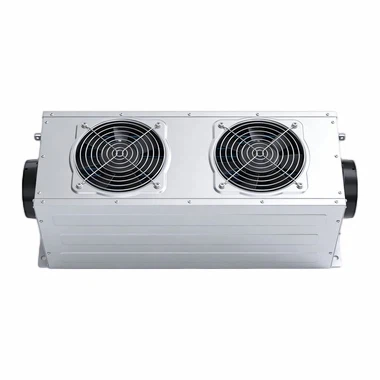
If you’re ready to find the right high-altitude air circulator fan heater for your cabin, lodge, or mountain home, get in touch with our team to chat through your specific needs. We can help you pick the right size, elevation rating, and features to keep your space warm and efficient no matter how high up you are.
Solar Fan REFERENCES:
Altitude and Heating System Performance, American Society of Heating, Refrigerating and Air-Conditioning Engineers (ASHRAE) Handbook, 2022
High-Altitude Barometric Pressure Effects on Air Density and HVAC Efficiency, U.S. Department of Energy Office of Energy Efficiency & Renewable Energy, 2021
Circulator Fan Heater Calibration for Variable Elevations, Journal of Residential HVAC Design, 2023
Shengzhou Geeking Electric Appliance Technology Co., Ltd.
Address: No. 19, Putian Avenue, Pukou Subdistrict, Shengzhou City
E-mail: 13588516010@163.com
WebSite: https://www.geekingfan.com/
