Hey there, fellow piping industry folks! If you’ve ever stared at a pipeline layout and wondered why those curved 90-degree or 45-degree bends look so sturdy—like they can handle whatever flow, pressure, or temperature gets thrown at them—you’re not alone. As someone who’s been sourcing, inspecting, and supplying pipe elbows for over a decade, I get questions nonstop from contractors, plant operators, and process engineers: “What are these things actually made of? Why does one elbow hold up in a refinery and another rust out in a water treatment plant in two years?” Today, I’m breaking down the chemical composition of pipe elbows, no overly jargon-heavy textbook stuff—just real insights from the supply floor. Pipe Elbow

First, let’s get one thing straight: pipe elbows aren’t a one-size-fits-all part. Their chemical makeup is custom-tailored for where they’ll live, and getting that mix right is the difference between a part that lasts 20+ years and one that becomes a maintenance headache. When I’m working with a client to pick the right elbow for their project, the first question I ask is “What’s it going to carry, and what’s the environment like?” That dictates the base material and the exact alloying elements we use—elements that do everything from boost strength to fend off corrosion.
The most common pipe elbows you’ll see out in the world are carbon steel elbows. These are the workhorses of piping systems—used in everything from municipal water lines to general process manufacturing. I’ve sold more carbon steel elbows than any other type over the years, and their chemical composition is simple at its core: iron, with a small amount of carbon (usually between 0.05% and 0.30% by weight). Wait, why carbon? Because it hardens iron without making it brittle. Too little carbon, and the elbow would be soft and prone to bending under pressure; too much, and it’s likely to crack when exposed to sudden temperature changes or mechanical stress.
But raw iron and carbon aren’t enough to make a quality pipe elbow. We add a handful of other elements called alloying elements, in precise percentages, to tweak performance. For carbon steel elbows, the key secondary elements are manganese, silicon, and sometimes small amounts of phosphorus and sulfur—though we keep those last two as low as possible. Manganese, for example, doesn’t just add strength; it helps remove impurities from the iron during manufacturing, which prevents defects that would weaken the elbow over time. Silicon acts as a deoxidizer, too, making sure the steel is solid and free of bubbles that could turn into failure points. The low levels of phosphorus and sulfur are critical: too much phosphorus makes steel brittle (we call that cold shortness), and too much sulfur causes it to crack when heated (hot shortness), so we cap both at 0.05% or lower, per industry standards.
Now, not every elbow can handle carbon steel. If you’re working with a system that has corrosive fluids—like saltwater for offshore rigs, or acidic chemicals in a chemical plant—you need stainless steel elbows. This is where the composition gets more interesting. Stainless steel’s signature is chromium, right? That’s the element that forms that thin, invisible oxide layer on the surface when the elbow is exposed to air or moisture. That layer (called a passive film) self-heals if it’s scratched, so it keeps corrosion from eating into the steel below. For most standard stainless steel elbows (like 304 and 316 grades, which are the workhorses here), chromium makes up between 16% and 20% of the composition.
The difference between 304 and 316 stainless steel is another example of how composition is tailored to use case. 304 is the go-to for food and beverage processing, general water lines, and mild chemical exposure. Its extra element is nickel, at around 8% to 10.5%—nickel boosts the steel’s toughness and makes that passive chromium layer even more stable. But if you’re dealing with saltwater or chlorides (like in a coastal power plant or a marine pipeline), 304 won’t cut it. Chlorides break down the passive film on 304, leading to pitting corrosion. That’s where 316 stainless comes in: it adds 2% to 3% molybdenum, which is the magic ingredient that makes the alloy resistant to chloride-induced corrosion. I learned this the hard way early in my supply career—we sold 304 elbows to a small coastal food processing plant, and within a year, they were seeing pinhole leaks from salt exposure. We fixed it by swapping them for 316, and they haven’t had an issue since.
For even harsher environments, there are alloy steel elbows, and these have more specialized mixes. If you’re working in high-temperature applications—like power plant steam lines, or oil refinery furnaces—standard carbon or even stainless steel won’t hold up to sustained heat (think 500°F and up). Alloy steel elbows here add elements like chromium, molybdenum, and vanadium in higher percentages. For example, 12% chromium alloy elbows are common in high-temperature steam systems; the extra chromium adds heat resistance, and molybdenum boosts strength at those elevated temperatures. We also use these in some petrochemical lines where you’re dealing with both high heat and corrosive hydrocarbons. And if you need even more, there are duplex stainless steel elbows, which are a mix of austenitic and ferritic stainless steel—they have higher levels of chromium, molybdenum, and nitrogen, making them ideal for super corrosive applications like desalination plants or offshore oil platforms. I recently supplied a set of duplex elbows for a deepwater drilling project, and their composition was 22% chromium, 5% nickel, 3% molybdenum, plus nitrogen—perfect for withstanding saltwater pressure and corrosion at 1,000+ feet below the surface.
Wait, I should also mention alloy steel elbows for low-temperature use? Some piping systems work in freezing conditions, like Arctic oil pipelines or cryogenic storage lines. For those, we use a type of low-carbon nickel alloy elbow. Instead of regular carbon steel, these have up to 9% nickel, which keeps the metal tough and prevents it from becoming brittle at temperatures as low as -320°F. I remember a client in northern Canada who was building a pipeline for liquid natural gas transport—they needed elbows that wouldn’t shatter when the temperature dropped to -40°F. Regular carbon steel would have cracked immediately, but the 9% nickel alloy handled it without a hitch.
Let’s touch on something that’s often overlooked: trace elements, and why they matter. Even tiny amounts of elements like copper, titanium, or niobium can make a big difference. For example, adding small amounts of titanium (less than 0.5%) to stainless steel elbows prevents grain growth during welding, which stops the weld area from being weaker than the rest of the elbow. That’s huge—welds are one of the most common failure points in piping systems, so making sure they’re as strong as the base metal is non-negotiable. I always stress to my clients that they shouldn’t cut corners on trace element specs; I’ve had clients try to save a few bucks by specifying elbows with lower titanium content, and inevitably, they’ve come back later with weld failures. It’s a short-term cost saving that leads to long-term downtime, which is way more expensive.
Now, how do we actually get that precise composition? Most pipe elbows are made by welding or seamless forging, and the composition is controlled during the steelmaking process. When we source raw steel billets, we test their chemical makeup to make sure they meet the industry standards (like ASTM A234 for carbon steel elbows, ASTM A403 for stainless steel, or ASTM A815 for duplex stainless). Before any elbow leaves our warehouse, we also do spot checks with a PMI (positive material identification) analyzer to confirm the composition matches what was ordered. This is how we catch mistakes—once, a batch of 316 elbows came in with a low molybdenum content, and we rejected the entire shipment instead of sending it to a client who would have had issues down the line. That’s the kind of attention to detail that matters in this business.
I know a lot of people reading this might be thinking, “Why does this composition stuff matter to me? I just need an elbow that fits my pipe size.” But here’s the thing: the chemical composition is the foundation of every property you care about—corrosion resistance, strength, heat tolerance, longevity. If you pick the wrong composition for your application, you’re looking at leaks, unplanned shutdowns, even safety hazards. I’ve seen refineries shut down for days because a cheap elbow with the wrong alloy failed, costing hundreds of thousands of dollars in lost production. As a supplier, my job isn’t just to send you an elbow that fits; it’s to make sure the chemical makeup is exactly what you need for your specific conditions.
Let’s wrap this up with a quick recap, so it’s easy to remember. Pipe elbows are made of custom alloy mixes tailored to their use:
- Carbon steel elbows: Iron + 0.05-0.30% carbon + small amounts of manganese, silicon. Best for general, low-corrosion applications.
- Standard stainless steel (304): Iron + 16-20% chromium + 8-10.5% nickel. For mild corrosion, food/beverage, general water.
- Marine-grade stainless (316): Iron + 16-18% chromium + 10-14% nickel + 2-3% molybdenum. For chloride-rich, corrosive environments.
- Duplex stainless: 22%+ chromium + 5%+ nickel + 3% molybdenum + nitrogen. For extreme corrosion, offshore, desalination.
- High/low temp alloy elbows: Add molybdenum, vanadium, or 9% nickel for heat or cold resistance.
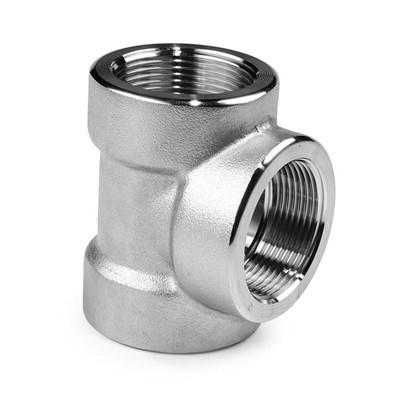
At the end of the day, the chemical composition of a pipe elbow isn’t just a technical spec—it’s the reason your piping system runs smoothly for decades. If you’re working on a new project, or dealing with persistent elbow issues in an existing system, don’t guess at the composition. Reach out to us to talk through your needs—we can walk you through the right alloy mix, confirm it meets all your standards, and make sure every elbow we supply is tested and built to last. No generic parts, no cutting corners, just the right composition for your application.
EN Flanges References
ASTM International. (2020). Standard Specification for Piping Fittings of Wrought Carbon Steel and Alloy Steel for Moderate and High-Temperature Service. ASTM A234/A234-20.
ASTM International. (2021). Standard Specification for Wrought Austenitic Stainless Steel Piping Fittings. ASTM A403/A403-21.
ASTM International. (2020). Standard Specification for Wrought Ferritic/Austenitic Stainless Steel Piping Fittings. ASTM A815/A815-20.
Materials, Characterization, and Corrosion Center. (2019). Corrosion Resistance of Stainless Steels in Chloride Environments. North American Manufacturing Research Conference Proceedings.
Hebei Haihao Group Huadian High Pressure Pipe Fittings Co., Ltd.
As one of the most professional pipe elbow manufacturers and suppliers in China, we are able to meet the needs of the majority of our customers. Please rest assured to wholesale high quality pipe elbow made in China here from our factory. For price consultation, contact us.
Address: Donglin Industrial Zone, Mengcun County, Cangzhou City, Hebei Province, China
E-mail: haihaohuadian@outlook.com
WebSite: https://www.hhfittings.com/
