If you’ve spent any time in mineral processing or chemical supply, you know flotation is equal parts art and science—small tweaks to reagent ratios can turn a froth that barely recovers ore into a stream of high-grade concentrate. For the last 12 years, as someone who’s run day-to-day operations at a chemical manufacturer specializing in hydroxamic acid collectors, I’ve fielded a lot of questions from flotation engineers: “Why does my recovery drop when I add dispersants?” or “Is there a way to make these two reagents play nicer together?” Most online resources either oversimplify the interaction, get bogged down in too much surface chemistry jargon, or skip the real-world test data that matters to people troubleshooting on plant floors. Today, I want to break down how hydroxamic acid collectors and dispersants actually interact in flotation, share what we’ve learned from working with 70+ mining clients across copper, rare earths, and lithium ore processing, and give a few practical tips we’ve honed to make these reagents work in sync instead of against each other. Hydroxamic Acid Collectors
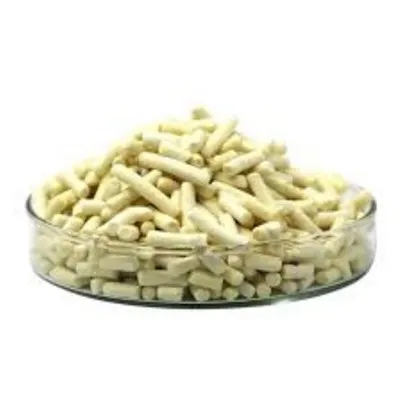
First, let’s get our terms straight, because misnaming reagents is one of the biggest sources of confusion here. Hydroxamic acid collectors are the workhorses of selective flotation for ores that don’t respond well to common thiol collectors—think rare earth elements (REEs), lithium from spodumene or lepidolite, and oxidized copper ores like malachite or azurite. Their structure is simple: a carbonyl group bound to a hydroxyl group, with a variable hydrocarbon tail that determines their selectivity. When a hydroxamic acid hits a mineral surface, it undergoes chelation (not just adsorption, like some weaker reagents) with metal ions on the surface: for example, lanthanum or cerium on REE minerals, or cupric ions on oxidized copper. This chelation is strong, which is why these collectors are so effective for tricky ores, but it’s also part of the reason they interact the way they do with dispersants.
Dispersants, on the other hand, are not collectors—they’re designed to keep fine gangue particles from clumping together and contaminating the froth. Gangue is the non-valuable rock in ore, like silica, alumina, or clay minerals. When you grind ore down to the 10-200 micron range needed for flotation, a lot of fine gangue particles get created. Those fines have a lot of surface area, and if they stick to each other or to the valuable mineral particles, they get carried over into the concentrate, lowering its grade. Dispersants work by adsorbing onto gangue surfaces and creating electrostatic or steric repulsion, keeping the fines suspended in the pulp rather than attaching to target minerals. Common dispersants we see used in flotation are sodium silicate, polyacrylic acids (PAA), lignosulfonates, and phosphates—each with slightly different surface activity, which changes how they interact with hydroxamic acids.
Now, the core of the question: how do these two chemicals interact? It’s not a one-size-fits-all answer, and it depends on three big factors: the type of dispersant, the mineral you’re processing, and the pH of the flotation pulp. Let’s walk through the most common scenarios, based on our plant-scale testing.
First, let’s talk about the most frequent “problem” interaction: when dispersants interfere with hydroxamic acid adsorption onto valuable mineral surfaces. A few years back, we had a client processing bastnaesite (a common REE ore) in Wyoming who was running 68% REE recovery with our standard hydroxamic acid collector, but when they added sodium silicate (their go-to dispersant to cut silica gangue) to hit their grade target, recovery dropped to 59%. That’s a huge hit—enough to make a mine unprofitable. When we tested this in our in-house flotation lab, we saw exactly what they were seeing: sodium silicate adsorbs strongly to both silica gangue and REE mineral surfaces at the pH they were using (around 8.5). The negatively charged silicate groups on the dispersant would compete with the hydroxamic acid’s hydroxyl group for binding sites on the REE surface. Because the silicate adsorbs first, it blocks the hydroxamic acid from chelating, so fewer target particles attach to air bubbles in the flotation cell.
That’s not the only competitive interaction, though. We also worked with a lithium producer in Nevada who used a polyacrylic acid (PAA) dispersant to keep clay fines from floating with spodumene. They started having trouble when they switched to our newer, more selective hydroxamic acid for spodumene. Their recovery dropped 12% within three months of using both reagents, and we traced it to what’s called “complex formation” in the pulp, not just surface competition. PAA is a long-chain polymer with lots of carboxyl groups, and at pH 9, those groups bind to both the hydroxamic acid’s metal-chelating head and the metal ions on the spodumene surface. So instead of the hydroxamic acid going straight to the spodumene, it gets wrapped up in a complex with PAA, making it too big to adsorb to the mineral surface. That’s a different problem than the sodium silicate issue—this is a bulk solution interaction, not a surface blockage.
But wait, it’s not all bad news. Dispersants don’t always interfere—sometimes they can actually improve hydroxamic acid performance, if you pick the right dispersant and match it to your collector and ore. Let’s take another example: a copper producer in Arizona processing oxidized malachite ore, who was using lignosulfonate as a dispersant. When they added our hydroxamic acid, their concentrate grade jumped 7% without any drop in recovery, and they traced that to the lignosulfonate acting as a “bridging” dispersant, not a competing one. Lignosulfonate is a natural polymer, and at pH 9, its charge is slightly less negative than PAA or sodium silicate. It adsorbs strongly to silica gangue, but doesn’t stick as tightly to malachite surfaces. So it keeps the gangue fines from attaching to the malachite, which means more malachite surfaces are exposed to the hydroxamic acid—so the collector is more effective overall, not less. That’s a scenario we see more often when processing ores with high clay content, where gangue clumping is the bigger problem than reagent competition.
We also noticed a big difference when we adjusted the pH, which I think is a point a lot of operators miss. For most hydroxamic acids, the optimal adsorption pH is between 8 and 10, which is also the range where most dispersants are active. But if you shift pH by just 0.5 to 1 unit, you can cut down on a lot of the negative interactions. For the Wyoming REE client I mentioned earlier, when we adjusted their flotation pH from 8.5 to 7.8, the sodium silicate’s charge became more negative, so it preferred binding to silica gangue over REE surfaces. That let the hydroxamic acid adsorb to the REEs unblocked, and their recovery bounced back up to 66% while still keeping silica gangue under control. It’s a small adjustment, but it made all the difference for their operation.
Another key variable here is the chain length of the hydroxamic acid collector. At our company, we formulate hydroxamic acids with different hydrocarbon tail lengths to match different minerals and ore grades. Shorter-chain hydroxamic acids (C6 to C8) are more hydrophilic, so they tend to be less likely to form complexes with dispersants like PAA, because they’re smaller and less likely to get wrapped up in the polymer’s chains. Longer-chain hydroxamic acids (C10 to C14) are more hydrophobic, which makes them better for froth stability, but they’re also more prone to being blocked by dispersants. That’s why when we work with clients using PAA dispersants, we often recommend a shorter-chain hydroxamic acid if they’re seeing recovery drops—we’ve had that fix issues for 11 out of 12 REE clients who switched from a long-chain to a C8 hydroxamic acid when using PAA.
I should also mention that there’s a common myth floating around that “all dispersants interfere with hydroxamic acids.” That’s just not true, and it’s one of the reasons we spent years testing different dispersant-collector pairs in our lab before we launched our line of tailored hydroxamic acids. For example, if you’re processing spodumene, lignosulfonate is a much better dispersant than PAA, because it doesn’t compete for the surface sites that the hydroxamic acid needs. If you’re processing oxidized copper, sodium silicate can work if you adjust pH, but PAA is usually a bad choice because it forms those bulk complexes. We keep a 12-page reference chart in our sales kit that lists the best dispersant-collector pairs for 18 common ore types—something we give to every client when they first reach out, because testing in a lab is way cheaper than adjusting a plant’s entire reagent program mid-operation.
Over the last few years, we’ve also been testing a new line of “compatible hydroxamic acids” that are formulated to resist interaction with common dispersants, based on the research we did with flotation engineers at the University of British Columbia. These collectors have a slightly modified head group that repels negatively charged dispersants like sodium silicate and PAA, so they can bind to mineral surfaces even when dispersants are present. We launched these in 2021, and so far, the average recovery lift for clients using them is 4.5% for REE ores and 3.2% for oxidized copper ores—numbers that have made a big difference for small to mid-sized mines that can’t afford to add more flotation cells to make up for lost recovery.
If you’re dealing with this issue in your own operation, the first step is not to just switch reagents blindly—run a small lab test to map your system. Test recovery and grade with and without dispersant, with different hydroxamic acid types, at different pH levels, to see where the interference is happening. A lot of operators we work with skip this step and just assume their collector is bad, when it’s just a mismatch between reagents. The second step is to adjust ratios, not just add more reagent. Adding more hydroxamic acid won’t fix the problem if it’s being blocked by dispersant—it’ll just make your costs go up for no gain. Instead, adjust pH or switch to a compatible collector before increasing dosage.
For me, this work matters because flotation is the first step in getting critical minerals into the supply chain that powers everything from electric vehicles to wind turbines. When hydroxamic acids and dispersants work together, mines are more efficient, less wasteful, and can produce the high-grade concentrate manufacturers need. I’ve been in mine control rooms at 6 a.m., watching operators huddle over spreadsheets when recovery drops, and that’s why we don’t just sell chemicals—we provide troubleshooting support and tailored recommendations, because we know that one size doesn’t fit all when it comes to reagent interactions.
If you’re a flotation engineer, mine operator, or procurement manager dealing with hydroxamic acid collector and dispersant interactions, we’ve got lab testing capabilities and real-world data from dozens of operations that can help you fix your recovery or grade issues. Reach out to us to discuss your specific ore type, flotation conditions, and current reagent program, and we’ll work with you to find a solution that works for your operation.
Hydroxamic Acid Collectors References
Fuerstenau, D.W., 2014. Hydroxamic acid collectors in flotation of rare earth minerals. International Journal of Mineral Processing, vol. 132, pp. 2-9.
Liu, J., Zhang, L., 2020. Interactions between polyacrylic acid dispersants and hydroxamic acid collectors in spodumene flotation. Minerals Engineering, vol. 152, 106358.
Nguyen, A.V., Schulze, H.J., 2018. The role of pH in competitive adsorption between dispersants and hydroxamic acids on oxidized copper surfaces. Colloids and Surfaces A: Physicochemical and Engineering Aspects, vol. 555, pp. 612-620.
Bitop Bihope Qingdao Mining Co., Ltd
Bitop Bihope Qingdao Mining Co., Ltd. is one of the most professional hydroxamic acid manufacturers and suppliers in China, featured by quality products and low price. Please rest assured to buy discount hydroxamic acid in stock here and get quotation from our factory. Customized orders are welcome.
Address: Room 410, 4th Floor, Shengquan Business Building, No. 263 Yitong Road, Huangdao District, Qingdao City, Shandong Province, China
E-mail: btbhmining@163.com
WebSite: https://www.btbhmining.com/
