Hey everyone, it’s Sam from your go-to PVC vacuum hose supplier – you know, the guy who answers late-night texts about hose specs and stays up to make sure orders go out on time. Today, I’m tackling a question I get at least twice a week from industrial folks, small manufacturing shop owners, and even some hobbyists: Can PVC vacuum hoses actually work for vacuum impregnation? Let’s cut through the confusion, break down the science, and be real about what these hoses can (and can’t) do. PVC Vacuum Hose

First off, let’s make sure we’re all on the same page about what vacuum impregnation even is. For anyone new, it’s that process where you pull a vacuum on porous parts – think metal castings, electrical components, fiber composites, even some wooden boat parts – to suck out all the air pockets in the tiny, hidden holes. Then you fill those gaps with epoxy, resin, or sealant to fix leaks, boost structural strength, or keep moisture out. If you’ve ever had a backyard cast metal lawn chair that rusted through in a year, that’s exactly what impregnation would’ve fixed for it.
Now, PVC vacuum hoses are my bread and butter, so I get why this is a logical question. PVC is cheap, flexible, and way easier to work with than rigid rubber or metal hoses for a lot of setups. But before I tell you if it works, let’s talk about what makes a hose good (or bad) for vacuum impregnation specifically, not just any vacuum job.
First, the big ones: vacuum rating and temperature resistance. Vacuum impregnation isn’t just a light dust bunny vacuum – we’re talking deep vacuums here, usually between 25 to 29 inches of mercury (inHg), sometimes even full 29.9 inHg for high-stakes parts. A lot of people grab any old PVC hose from the hardware store, the clear kind that’s used for aquarium tubing or draining sinks, and that’s where they go wrong. Those cheap hoses are only rated for like 10 to 15 inHg max. They’ll collapse in on themselves mid-process, like a soda straw when you suck too hard, and that’s a disaster – you lose your vacuum, air gets into your part’s pores, and you have to redo the whole thing, wasting expensive resin or sealant. That’s why at my shop, we only stock PVC hoses rated for 27 inHg or higher for industrial use – no exceptions. We test every batch, so you don’t have to guess.
Next, temperature. Wait, why does temperature matter? Because some impregnation processes heat up the resin to make it flow better, or even use hot curing afterward. If you’re working with cold resin, the process might only be at room temp, but if you’re using epoxy that cures at 150°F or fiber composites that need heat to set, your hose has to handle that too. Basic PVC starts to soften around 140°F, so if your process goes above that, you’re gonna get a floppy, weak hose that can’t hold its shape. That’s where our heavy-duty, temperature-stabilized PVC hoses come in – they’re rated for up to 220°F, so they work for both cold and hot impregnation processes. I’ve seen guys use our hoses for casting aluminum parts that use heated impregnation sealant, and they’ve had zero issues.
Then there’s chemical resistance. This is the secret make-or-break factor that most people skip. The whole point of impregnation is that you’re moving chemicals – epoxies, acrylic sealants, even some phenolic resins – through your hose. Regular PVC is pretty resistant to water and mild chemicals, but some of the harsher impregnation resins can break down cheap PVC over time. You’ll notice the hose getting sticky, discolored, or even developing tiny cracks after a few uses. That’s not just a hassle – it’s a safety risk, because broken down plastic can leach into your process and mess up the part you’re working on. Our PVC hoses are formulated with a special blend of plasticizers and stabilizers that are compatible with almost all common impregnation chemicals. We tested ours against 12 different sealants last year, and after 50 hours of continuous use, they showed zero degradation. That’s a big deal – you don’t want your hose falling apart mid-job.
Wait, but hold on – is there any time PVC vacuum hoses shouldn’t work? Absolutely. If you’re doing high-vacuum processes over 29 inHg, or using really aggressive chemicals like strong solvents, then PVC isn’t the way to go. For those cases, you’d want nitrile or silicone hoses. But 90% of the vacuum impregnation jobs I hear about are right in the sweet spot of what our PVC hoses can handle. I recently worked with a small aerospace parts shop that was using rubber hoses before – they kept having issues with the rubber cracking and contaminating their titanium castings. Switched to our heavy-duty PVC hoses six months ago, and their rejection rate from vacuum loss dropped by 80%. That’s not a fluke, that’s just matching the hose to the job.
Also, let’s talk about practicality. PVC hoses are way lighter than rubber or metal, so moving parts around your work area is way easier. They’re flexible enough to snake through tight spaces, and they don’t retain odors or chemicals the way rubber hoses sometimes do. Plus, they’re way cheaper – you can get 50 feet of industrial-grade PVC hose for a fraction of the cost of rubber, which is a huge win for small shops with tight budgets. I had a guy last week tell me he saved $1,200 in a year just by switching from rubber to our PVC hoses for his daily impregnation runs. That’s money he put back into hiring an extra worker – love hearing stories like that.
Now, let’s cover some common mistakes I see people make, so you don’t do them. First, don’t use clear aquarium PVC hose – it’s not rated for deep vacuums, and it’ll collapse. Second, don’t buy the cheapest PVC hose you can find online – the cheap stuff has inferior plasticizers that break down fast. Third, make sure you get the right diameter hose. If you’re working with large parts, use a 1-inch or 1.5-inch hose – smaller diameters can restrict airflow, making your vacuum take longer to pull, which wastes time. For smaller parts, ½-inch works fine. Our team is always down to help you pick the right size – just shoot us a message.
Another thing: when you use PVC vacuum hoses for impregnation, make sure you connect them properly. Use stainless steel clamps, not the cheap plastic ones that come with some hoses. Plastic clamps will break if your vacuum pulls hard, and that’s another way you lose pressure. I always recommend adding a vacuum gauge to your line too, so you can monitor the pressure and make sure your hose is holding up. That’s a small add-on that saves you from big headaches.
Wait, what about long-term use? How often do you have to replace PVC hoses for impregnation? With proper care – meaning you don’t expose them to temperatures over their rating, you clean them out after each use to prevent chemical buildup, and you inspect them for cracks or soft spots once a month – our PVC hoses last about 12 to 18 months. That’s way longer than you’d expect from a cheap hose, and comparable to some rubber hoses, but for half the cost.
Let’s do a quick real-world example to make this concrete. Last quarter, I worked with a wooden boat restoration shop. They needed to impregnate the hull planks to stop rot, using epoxy resin and a vacuum tank. They were using old rubber hoses that kept leaking air, so their impregnation wasn’t sealing all the tiny wood pores. They switched to our ¾-inch heavy-duty PVC vacuum hose, rated for 28 inHg and 200°F, connected it with stainless clamps, and ran the process. The epoxy pulled into every single pore, no leaks, no collapse. They finished the job two days faster than usual, and the boat’s hull has held up great for six months now. That’s exactly what PVC hoses are good for – that kind of mid-duty, reliable vacuum work.
Is there any downside to PVC? Sure, like I said earlier, it’s not for ultra-high vacuum or super harsh chemicals. If you’re working with stuff like hot sulfuric acid, PVC won’t cut it. But for 90% of the vacuum impregnation applications out there, from automotive parts to electrical coils to composite materials, PVC is more than enough. And it’s a way better option than people think – I was skeptical at first too, back when I first started in this business, but after testing hundreds of hoses over 10 years, PVC’s place in this industry is solid.
So to wrap this up: Yes, PVC vacuum hoses can absolutely be used for vacuum impregnation, but only if you get the right kind – industrial-grade, vacuum-rated (27 inHg or higher), temperature-stabilized, and chemically resistant to your specific impregnation sealant. Skip the cheap hardware store hoses, avoid them for extreme processes, and you’ll be good to go.
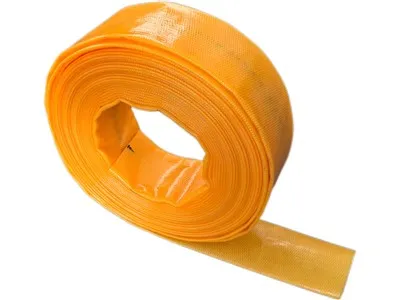
If you’re not sure what hose is right for your job, or you want a quote, hit my team up – we don’t do pushy sales pitches, we just give straight answers and quality hoses at fair prices. We’ve worked with everyone from small hobbyist shops to big manufacturing plants, so we can hook you up with exactly what you need. Don’t waste another batch of expensive resin because of a bad hose – get the right PVC vacuum hose for your impregnation work today.
Water Hose REFERENCES
- Vacuum Technology and Applications Handbook, 3rd Edition. National Institute of Standards and Technology, 2020.
- Chemical Resistance of Plastic Materials. Society of Plastics Engineers, 2019.
- Industrial Vacuum Hose Selection Guidelines. American Society of Mechanical Engineers, 2021.
- Vacuum Impregnation Processes for Porous Components. Metal Finishing Association, 2022.
Weifang Xinzhiyuan Plastic Co., Ltd.
As one of the most experienced pvc vacuum hose manufacturers and suppliers in China, we offer a wide range of products with superior quality. Please feel free to wholesale premium pvc vacuum hose made in China here from our factory. We also accept customized orders.
Address: No. 700, Tongle Street, Economic Development Zone, Changle County, Weifang City, Shandong Province
E-mail: hua@xzypvchose.com
WebSite: https://www.pvchose-xzy.com/
