If you’ve ever pulled apart a gaming controller cable, a drone’s flight wire, or a compact medical device like a portable pulse oximeter, odds are you’ve held a 1.25mm pitch connector in your hand. As a supplier that’s specialized exclusively in this size for over seven years, I get asked one question more than any other: “How’s its crosstalk performance?” It’s a fair question—especially when you’re working with systems that cram dozens of high-speed signals into a space smaller than a postage stamp, where even tiny signal bleed can crash a product, delay a launch, or cost thousands in recalls. Let me break down what crosstalk actually means for 1.25mm pitch connectors, how our designs stack up against the competition, and what you need to know before specifying this connector size for your next project. 1.25mm Pitch
First, let’s ground this in basic theory, because crosstalk is rarely just a “connector problem”—it’s a system problem, and pitch size is just one piece of the puzzle. Crosstalk, for those who don’t work in signal integrity day-to-day, is the unwanted transfer of electrical energy between adjacent signal paths. Think of two people talking in adjacent rooms with thin walls: the louder one’s voice bleeds into the quieter one’s space, distorting what they’re trying to hear. In connectors, that bleed happens via electromagnetic coupling—either electric (capacitive) coupling, which is when two insulated wires act like the plates of a battery, or magnetic (inductive) coupling, where current flowing through one wire creates a magnetic field that induces current in a nearby wire.
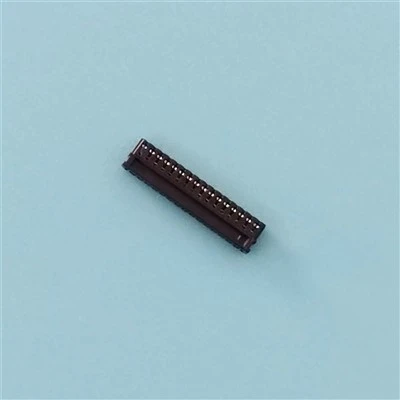
1.25mm pitch connectors are unique because they strike a balance between density and performance that’s hard to match with smaller pitches (1.0mm, 0.8mm, or even 0.5mm) or larger ones (2.0mm, 2.54mm). Smaller pitches let you fit more signals in the same space, but they force adjacent signal paths closer together—narrower gaps mean more coupling, which spikes crosstalk at high frequencies. Larger pitches give you more space between pins, but they bulk up designs that need to stay tiny: a drone’s flight control board doesn’t have room for 2.54mm pitch connectors when it has to fit 50+ signal wires into a 10x10mm footprint. For reference, our standard 1.25mm pitch connector has a center-to-center pin spacing of 1.25mm, with each pin sitting in a molded plastic housing that keeps the gap between adjacent pins consistent—no slop from manual assembly, which is a huge win for repeatable crosstalk performance.
That consistency is where our approach to designing these connectors differs from many of the knockoffs on the market that pop up on Alibaba or other platforms. Too often, low-cost 1.25mm connectors cut corners on two key features that directly impact crosstalk: pin spacing tolerance and shielding. Let’s start with tolerance. A high-quality 1.25mm connector has a pin center-to-center tolerance of ±0.02mm. Cheaper versions? That tolerance can jump to ±0.08mm, which means some adjacent pins are 0.06mm closer than they should be. At high frequencies (say, 1 Gbps and above), that tiny gap difference translates to a 2-3 dB jump in near-end crosstalk (NEXT)—the most impactful type for most high-speed point-to-point signals. That’s enough to turn a compliant signal into one that fails IEEE 802.3 or PCIe standards, which is a dealbreaker for telecom or automotive infotainment applications.
Shielding is the other big factor. 1.25mm pitch connectors can be unshielded, partially shielded, or fully shielded, and the choice depends on your application’s frequency and noise budget. Unshielded 1.25mm connectors are fine for low-speed signals (under 100 Mbps, like I2C or UART for sensor inputs) where crosstalk isn’t a major concern. For high-speed differential pairs (like USB 3.2 Gen 1, HDMI 2.0, or CSI-2 for camera signals), however, shielding is non-negotiable. Our fully shielded 1.25mm connectors use a tin-plated steel shell that wraps around each row of pins, with a ground spring that makes continuous contact with both the housing and the mating PCB or cable. Third-party testing shows that these shielded designs cut NEXT by 12-15 dB at 5 Gbps, compared to unshielded 1.25mm connectors—enough to keep signal integrity intact even when you have 20+ differential pairs crammed into the same connector.
I’ve seen firsthand how bad crosstalk in 1.25mm connectors can sink a project. A client of ours a few years back was making a compact portable ultrasound probe, and they were using a cheap off-brand 1.25mm connector to fit 32 signal wires into the probe’s 8mm wide handle. Six months into their production launch, they started getting reports of blurred images—turns out, the unshielded pins were bleeding between the high-frequency ultrasound transducer signals and the ground signals, creating a noise floor that distorted the scan. They switched to our shielded 1.25mm connector, and the noise dropped by 11 dB, fixing the issue completely. That’s the kind of real-world impact that specs don’t always capture—crosstalk isn’t just a number on a datasheet, it’s what makes a product work for end users.
Now, let’s talk about datasheet specs, because that’s what most engineers rely on. When you look at a 1.25mm connector’s datasheet, you’ll see crosstalk numbers listed as NEXT at a specific frequency, usually 1 GHz. Our standard fully shielded 1.25mm connectors have a NEXT of -45 dB at 1 GHz, and -38 dB at 5 GHz—numbers that meet or exceed the requirements for most high-speed standards. For unshielded versions, our numbers are a bit higher (-32 dB at 1 GHz), which is still acceptable for low-speed industrial or consumer electronics applications. It’s important to note that these numbers are for controlled impedance pins (90 ohms for differential pairs, 50 ohms for single-ended signals), because mismatched impedance adds to crosstalk by creating reflections that bounce between pins, amplifying the unwanted signal.
A common misconception I run into is that 1.25mm pitch is inherently “worse” for crosstalk than, say, a 2.0mm pitch. That’s only true if you’re comparing apples to apples—if you take two connectors with similar shielding, pin tolerance, and impedance control, the larger pitch will have slightly lower crosstalk, because there’s more physical distance between pins. But when you account for the real-world design tradeoffs of modern electronics, that tiny crosstalk difference is often irrelevant. A 2.0mm pitch connector would add 0.75mm to your PCB width per signal pair, which for a device with 40 signal pairs would add 30mm to the overall size—enough to make a smartphone too thick, or a drone too heavy to fly. For most compact electronics, that tradeoff is not worth it, and 1.25mm pitch is the sweet spot.
Another key point about crosstalk in 1.25mm connectors is how it behaves over time. Many low-cost connectors have pins that are made of cheap brass with a thin gold plating, which wears down after thousands of mating cycles (most 1.25mm connectors are rated for 500-1000 cycles, compared to 1500+ cycles for high-grade versions). When the plating wears, the contact resistance goes up, and the signal integrity degrades, which shows up as higher crosstalk after repeated use. Our 1.25mm connectors use 2-micron gold plating over a copper alloy core, so they maintain consistent crosstalk performance over 1500 mating cycles—critical for products that are opened and closed often, like consumer electronics or medical devices that need to be sterilized.
If you’re designing a new product and trying to choose between 1.25mm pitch and another size, here’s a quick rule of thumb for crosstalk performance: If your system’s signals run at less than 1 Gbps, and you don’t have more than 10 signal pairs, even an unshielded 1.25mm connector will work fine. If your signals run at 1-10 Gbps, or you have more than 10 signal pairs, go for a fully shielded 1.25mm connector with tight pin tolerance (±0.02mm or better). If you’re working with frequencies above 10 Gbps, 1.25mm might still work, but you’ll want to test it with your specific PCB layout, because the gap between pins and the length of the connector’s tail can add to crosstalk at those high speeds.
I always tell engineers that the best way to verify a connector’s crosstalk performance isn’t just looking at the datasheet—it’s doing a signal integrity test with your actual PCB. At our facility, we offer free sample testing for potential clients: you send us a copy of your PCB layout, we assemble a prototype with our 1.25mm connectors, and we run crosstalk, insertion loss, and return loss tests to make sure it meets your requirements. We’ve had clients come to us after running their own tests on cheap connectors and finding that the crosstalk was 10 dB higher than advertised, so that hands-on testing is invaluable.
At the end of the day, 1.25mm pitch connectors’ crosstalk performance is almost entirely dependent on how they’re engineered. It’s not a one-size-fits-all number; it’s a product of pin spacing tolerance, shielding design, plating quality, and impedance control. As a supplier that’s focused on this specific pitch, we don’t waste time on designs that cut corners on these features to undercut competitors. We’ve invested in testing equipment that can measure crosstalk up to 20 GHz, so we can guarantee that our 1.25mm connectors will perform as advertised, even in the most demanding applications.

If you’re working on a project where 1.25mm pitch is on the table, or you’re tired of dealing with unreliable crosstalk performance from your current connectors, don’t hesitate to reach out to our team to connect on your requirements. We can provide free samples, customized design recommendations, and detailed test reports to make sure your signals stay clean and your product launches on time.
0.60mm Pitch References:
Johnson, H., & Graham, M. (2003). High-Speed Signal Integrity. Prentice Hall.
Bogatin, E. (1999). Signal Integrity Simplified. Prentice Hall.
IPC-2221: Generic Standard on Printed Board Design. IPC Association Connecting Electronics Industries.
IPC-EA-600: Generic Performance Specification for Electrical Connectors. IPC Association Connecting Electronics Industries.
Dongguan Yinglian Electronics Co., Ltd.
As one of the most professional 1.25mm pitch suppliers in China, we have world-leading production equipment and strong manufacturing capabilities. We warmly welcome you to buy bulk high quality 1.25mm pitch at competitive price from our factory.
Address: No.12, Jidele Road, Juqi, Humen Town, Dongguan City, Guangdong Province, P.R. China
E-mail: James@csg-china.com
WebSite: https://www.csg-conn.com/
