If you’ve ever priced a security or perimeter fence, you’ve probably come across 6ft V-Bend welded mesh panels—one of the most popular solutions for residential yards, commercial properties, and industrial sites. But as someone who’s been supplying these panels for over a decade, I know that the question “What does a 6ft V-Bend welded mesh fence panel cost?” rarely has a straightforward answer. It’s not just a number pulled from a catalog; it’s a calculation of material, labor, transport, and market factors that change year to year. Let me break this down the way I do for every customer who walks through my door or sends an email asking for a quote. V-Bend Welded Mesh Fence

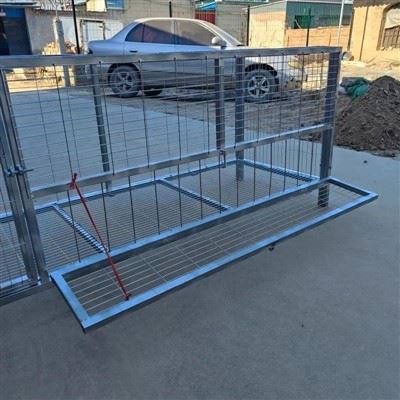
First, let’s start with the basics: a standard 6ft V-Bend welded mesh panel isn’t a one-size-fits-all product. The “6ft” refers to the height of the panel, usually 72 inches, but the width can vary too—most commonly 8ft or 10ft, which adds to the total cost. The V-Bend part is what makes this fence sturdier than a flat welded mesh panel: three or four (sometimes more) bends along the vertical axis of the panel, created by bending the mesh after welding, rather than before. These bends prevent the panel from sagging over time, which is a huge benefit for long-term durability. But that bending step adds labor and material handling costs right off the bat.
When I quote a customer, the biggest driver of cost is the material used, and 90% of V-Bend panels are made from steel wire. The type of steel wire, its thickness (called “gauge”), and whether it’s galvanized for rust resistance all play a role. Let’s talk gauges first. For residential fences, a 12-gauge or 11-gauge wire is standard. A 6ft panel with 12-gauge wire (a little thinner, good for yards and pet enclosures) might use about 1.5 pounds of steel wire, while a 11-gauge panel (thicker, better for commercial or industrial security) uses around 1.8 pounds of the same wire. If we’re talking about galvanized steel, that’s hot-dip galvanized, which involves dipping the entire panel into a zinc bath to prevent corrosion. The zinc coating adds a small but noticeable cost—usually about $0.20 to $0.30 per pound of steel, depending on current zinc prices. For a 1.5-pound 12-gauge panel, that’s an extra $0.30 to $0.45 just for the galvanizing layer.
Then there’s the wire mesh opening. Most V-Bend panels have a 2×3 inch or 3×3 inch grid, with 2-inch openings being more common for security. Smaller openings mean more wire is used, pushing the cost up. For example, a 6ft 8ft panel with 2×3 inch openings uses roughly 1.6 pounds of steel wire, while a 3×3 inch opening version uses about 1.4 pounds. That 0.2-pound difference might seem trivial, but when you’re ordering 100 panels, that adds up to 20 extra pounds of steel—no small expense.
Next up, labor and manufacturing overhead. Running a welded mesh fence factory isn’t cheap. We need precision welding machines that can handle high volumes without misaligning wires, bending stations to create those V-Bends, and quality control teams to check for broken welds or uneven bends. On top of that, there’s electricity, factory rent, and employee wages. A modern V-Bend panel line can produce about 500 panels an hour, so labor per panel is relatively low, but it’s still a factor that changes with the market. When minimum wage goes up, or when machine maintenance costs rise, those costs get passed on to customers.
Transport is another big one, and it’s where a lot of customers underestimate the total cost. A standard 6ft V-Bend panel is bulky—you can’t stack 50 of them in a small van; they need a flatbed truck that can handle 8ft or 10ft wide loads. The distance from my factory to the customer’s site makes a huge difference: delivering 50 panels 50 miles away might add $200 to $300 to the total cost, while delivering the same order 300 miles away could add $800 to $1,000. For large orders (like 500 panels or more), we often offer freight discounts because we can fill a full trailer, which cuts the per-panel transport cost significantly.
Now, let’s get to actual numbers to make this concrete. As of 2024, here’s a range of what a standard 6ft V-Bend welded mesh panel might cost: a basic residential grade, 12-gauge, 2×3 inch opening, galvanized panel (8ft wide) will run between $35 and $45 per panel. A thicker 11-gauge commercial grade, same opening and galvanized finish, is between $45 and $55 per panel. If you want a heavier-duty panel for industrial use, maybe with a 1.5-inch mesh opening for extra security, that can jump to $60 to $70 per panel.
But wait, that’s just the panel. You also need posts and accessories to install the fence, which add to the total cost. Steel posts (most commonly 3-inch or 4-inch round posts) cost between $10 and $25 each, depending on thickness, and concrete for setting posts is another $5 to $10 per post. If you’re hiring a contractor to install the fence, that adds $10 to $15 per linear foot of labor, so a 100-foot fence (12 panels) would add $1,000 to $1,500 in installation costs alone.
There are also factors that can change the cost outside of standard products. For example, if you need custom sizes—like a 7ft tall panel for extra security, or a curved panel to follow a property line—that’s going to add 15% to 30% to the base cost, because custom orders require adjustments to manufacturing lines and extra quality checks. If you order a very small quantity, like 10 panels, the minimum order fee is usually $50 to $100, which also pushes the per-panel cost up a bit. And don’t forget price volatility: steel and zinc prices fluctuate with global markets, so a quote you get in January might be slightly different than one you get in June. That’s why I always tell customers to lock in a quote for 30 to 60 days if they’re planning to order, to avoid unexpected price hikes.
Over the years, I’ve seen customers make the mistake of choosing the cheapest panel they can find, only to regret it later. A thin, non-galvanized 6ft V-Bend panel might cost $25 per panel, but it will rust through in 3 to 5 years, and the V-Bends will sag, making the fence look uneven and less effective. A good quality galvanized panel will last 15 to 20 years with minimal maintenance, so the upfront cost is worth it in the long run. I’ve had customers come back after 10 years asking for more panels, saying they still look as good as the day we installed them.
If you’re in the market for a 6ft V-Bend welded mesh fence panel, the best way to get an accurate cost is to tell me what you need: the height (we can do 6ft, 7ft, even 8ft), the width (8ft is standard, but 10ft is available), the wire gauge, whether you want galvanized or not, and how many panels you need. I can break down the cost for you, including transport and accessories, and answer any questions you have about durability or installation.
I’m here to help you find the right fence for your needs at a fair price. If you’re ready to get a detailed quote, or if you want to talk through your project to make sure you’re choosing the right panel, feel free to reach out. I’m always happy to walk through the details so you know exactly what you’re paying for, no hidden fees or surprises.
Wire Mesh Decking Panels References
- National Institute of Building Sciences. (2022). Fence Material Cost Guide. Whole Building Design Guide.
- American Galvanizers Association. (2023). Hot-Dip Galvanizing Costs and Benefits for Steel Fencing.
- Welded Mesh Manufacturers Association. (2024). Product Cost Factors for V-Bend Welded Mesh Panels.
- U.S. Census Bureau. (2023). Monthly Steel Wire Price Index.
- Fence Installation Association. (2022). Residential Fence Installation Labor and Material Costs.
Anping County Nuocheng Wire Mesh Co., Ltd.
As one of the most professional v-bend welded mesh fence manufacturers and suppliers in China, we also support customized service and OEM service. Please feel free to buy high quality v-bend welded mesh fence for sale here from our factory. For price consultation, contact us.
Address: 100 meters southeast of Beimanzi Village, Dahezhuang Township, Anping County, Hengshui City, Hebei Province, China
E-mail: lixuhao0888@gmail.com
WebSite: https://www.ncwiremesh.com/
