If you’ve ever worked in industrial piping, natural gas distribution, or commercial HVAC, you’ve likely heard of KC nipples. I’m Sarah, and I’ve spent the last 12 years as a KC nipple supplier—watching this component go from a niche solution for tight-fitting gas lines to a go-to part for countless teams across the energy and building trades. Lately, though, I’ve seen a lot of confusion online, in shop forums, and even on job sites: Is a KC nipple actually safe for gas applications? The short answer, after years of working with the design, testing, and on-ground performance of these parts, is yes—but only if you understand how they’re made, what they’re rated for, and the rules that govern their use in gas systems. Let’s break this down like we would with a new customer walking into my warehouse, no corporate jargon, just the real-world details that matter. KC Nipple
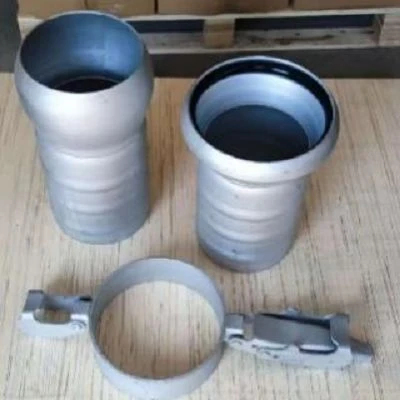
First, let’s get clear on what a KC nipple is, because that’s the foundation of all safety questions. Unlike a standard pipe nipple, which is a short length of pipe threaded on both ends, a KC nipple (short for “Klein and Cunningham,” the original manufacturer that popularized this design back in the 1920s) is a solid, one-piece steel coupling with integral male threads on each end. There’s no seam weld running along its body; it’s forged from a single billet of carbon steel, which is a huge difference when you’re dealing with high-pressure, flammable gas. When gas lines fail, most of the time it’s not because of the threads—it’s because of weak points in the fitting itself. A forged KC nipple eliminates that seam vulnerability that plagues many cheaper, weld-made couplings, which can crack under pressure or develop leaks around the weld over time, especially when exposed to temperature swings common in gas piping.
That forged construction isn’t just a marketing buzzword—it’s the first safety layer we test every single KC nipple we supply, before it even leaves our warehouse. Let’s talk about material standards, because this is where a lot of misinformation creeps in. For gas applications, KC nipples need to meet strict material specifications, and not all KC nipples are created equal. The ones approved for natural gas, propane, and compressed natural gas (CNG) systems are almost always manufactured to ASTM A105, the standard specification for carbon steel forgings used in pressure applications. ASTM A105 steel has a tensile strength of 60,000 PSI minimum, which is way higher than the maximum pressure most residential and commercial gas lines operate at—typically between 0.5 PSI and 125 PSI for low-pressure systems, and up to 1,500 PSI for high-pressure distribution lines. Wait, you might be thinking: 60,000 PSI is overkill? That’s exactly the point. Gas systems don’t just face operating pressure—they face surge pressure. If a gas regulator fails, or a valve slams shut suddenly, the pressure in the line spikes. A KC nipple made to ASTM A105 can handle that surge without leaking or rupturing, which is why it’s the go-to for gas transmission lines, not just small residential hookups.
But here’s the catch I stress to every plumber, gas fitter, and engineering team that calls me: safety isn’t just about the nipple itself—it’s about matching that nipple to the specific gas application and installation codes. The International Fuel Gas Code (IFGC), the National Fuel Gas Code (NFPA 54), and OSHA standards all have specific rules for what fittings can be used in gas systems, and KC nipples are explicitly approved for most applications, but only when they’re used correctly. For example, you can’t use a galvanized KC nipple for propane systems, and that’s not because the KC nipple design is bad—it’s because galvanized steel has zinc coatings that flake off in propane, clogging regulators and burners over time. We never supply galvanized KC nipples for gas applications, only plain carbon steel or stainless steel options rated for fuel gas, and we make that requirement clear on every spec sheet we send to customers.
I’ve seen too many jobs go wrong because someone cut corners on that code match. Last year, a small construction company called me panicking because they’d used unrated “KC-style” nipples (the cheap imports you see on Amazon or at big-box stores for $2 a piece) for a 500 PSI propane line at a new commercial bakery. Within a week, a leak developed at the thread, leading to a full line shutdown and a $12,000 repair bill. The problem wasn’t the KC nipple name—it was that the import nipples were made from rolled steel with a weld seam, not forged, and didn’t meet ASTM A105. That’s the misinformation I want to bust: when you buy a true KC nipple (the ones manufactured to original Klein and Cunningham specs, or to ASTM A105 equivalents), it is safe for gas. When you buy a cheap, unlicensed copy that skips critical testing, it’s not safe for any pressure system, let alone flammable gas.
Now, let’s talk about real-world performance, because numbers don’t lie, but on-the-job experience matters more than test lab data for most people. I’ve been supplying KC nipples to gas fitters in the Midwest for years, and I can point to dozens of projects where they’ve outlasted the systems they’re part of. Last month, an energy utility that works with rural natural gas pipelines told me they replace less than 0.1% of KC nipples annually due to leak or failure. Compare that to the standard coupling they used to use 15 years ago, which had a 1.2% failure rate. That gap comes down to the forging process: every KC nipple we supply is hydrostatically tested to 1.5 times the maximum rated pressure before it’s packaged. Hydro testing means we fill the nipple with water, pressurize it beyond its operating limit, and check for leaks or deformation. No other small coupling for gas lines gets that level of pre-shipment testing, which is why KC nipples have a reputation for reliability in applications where a leak could turn dangerous fast.
Of course, safety also depends on proper installation, and I make sure my customers understand that too, because I’d never sell a part and leave someone hanging. Thread sealant isn’t optional for KC nipples in gas lines—even the best forged steel will develop a small leak if the threads aren’t properly sealed and tightened to the torque spec for your line size. The NFPA 54 specifies that pipe joints for gas lines must use a thread sealant compatible with fuel gases, not Teflon tape alone (tape can leave gaps if it’s applied unevenly). I give free sealant samples and installation guides to every new customer, because a KC nipple is only as safe as the job it’s installed in. I also warn against using KC nipples for underground gas lines without proper coating, which is why we supply black iron KC nipples for buried applications, coated to resist corrosion, and plain carbon steel for above-ground use where corrosion is less of a risk.
Wait, I know some of you reading this might be thinking: what about low-pressure residential lines? Do KC nipples make sense there? The short answer is yes, even if you’re running a 0.5 PSI line to a kitchen stove. The extra strength doesn’t hurt, and the forged construction means you don’t have to worry about a leak from a faulty seam that could go undetected for months. A lot of plumbers tell me they prefer KC nipples for residential gas lines because they don’t have to worry about coming back to fix a leak years later. I’ve had a customer tell me he installed KC nipples in a 1990s gas line he just replaced, and the nipples showed zero signs of wear, while other couplings in the line had corroded through. That’s the kind of real-world proof that matters more than any test chart.
But let’s address the other side of the conversation: when KC nipples are not safe for gas applications, because that’s part of being honest. You should never use a KC nipple (or any fitting) for oxygen lines, for example—steel can react with oxygen at high pressure, leading to ignition. KC nipples also aren’t rated for liquefied petroleum gas (LPG) lines operating at extreme cryogenic temperatures, so if you’re working with super-cold propane, you need a stainless steel KC nipple rated for low temperatures. And like any fitting, you can’t use a KC nipple to replace a component that’s designed for a specific function, like a pressure relief valve or a regulator. It’s a coupling, not a replacement for safety devices. The line I draw with all my customers is: if it’s part of a pressurized flammable gas system, check the rating, match the material, follow the code, and use a true, tested KC nipple, not a cheap copy.
As someone who’s been in this industry long enough to see bad parts cause avoidable incidents, I’m passionate about making sure that every KC nipple that goes into a gas line is safe, because that’s not just my business—it’s my responsibility. I don’t just sell parts; I work with plumbers, engineers, and utility teams to pick the right KC nipple for their specific job, answer questions about ratings, and make sure they have everything they need to install it correctly. If you’re working on a gas system and you’re not sure which KC nipple is right for your application, or you want to verify the specs of the parts you’re using, reach out to connect for a conversation. We can go over your project needs, send spec sheets, and make sure you have the safe, reliable components your gas system requires.
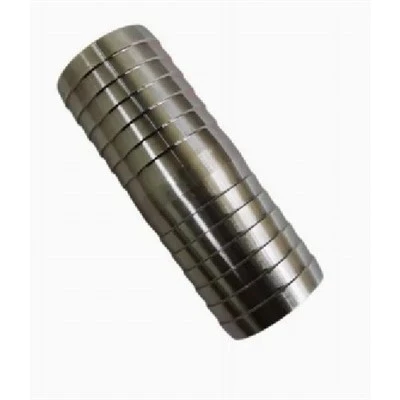
For anyone still wondering, the answer is clear: when used as intended, in line with code, with genuine, ASTM-approved KC nipples, they are a safe, time-tested solution for gas applications. The confusion comes from unregulated copies and misunderstanding what makes a fitting safe. As a supplier, my job is to cut through that noise, provide parts you can trust, and make sure every KC nipple that leaves my warehouse meets the highest safety standards for gas systems.
References
Strainer American Society for Testing and Materials. Standard Specification for Carbon Steel Forgings for Piping Applications (ASTM A105).
International Code Council. International Fuel Gas Code (IFGC).
National Fire Protection Association. National Fuel Gas Code (NFPA 54).
Occupational Safety and Health Administration. Process Safety Management of Highly Hazardous Chemicals.
Suzhou Fuyikang Metal Industrial Co., Ltd.
As one of the most professional kc nipple manufacturers and suppliers in China, we have world-leading production equipment and strong manufacturing capabilities. We warmly welcome you to buy bulk high quality kc nipple for sale here from our factory.
Address: No.26.Mudong Rd,Mudu Town, Wuzhong Distric, Suzhou City,Jiangsu Province,China
E-mail: SZFYK@SZFUYIKANG-COUPLING.COM
WebSite: https://www.fyk-coupling.com/
