Hey everyone, it’s Jake here from the LMO battery team—you know, the guys who actually work with these things day in and day out, troubleshooting cell performance, field testing packs, and helping customers get the most out of their LMO batteries. If you’ve been around the battery space for even a minute, you’ve probably heard the term “capacity fade” thrown around, maybe in a product spec, a technical review, or a late-night Slack chat with a customer freaking out because their LMO pack lost 15% of its juice after a year. Today, I’m breaking down exactly what causes that fade in LMO lithium batteries, no stuffy textbook jargon—just real, hands-on insights from people who deal with this every single day. LMO Lithium Battery
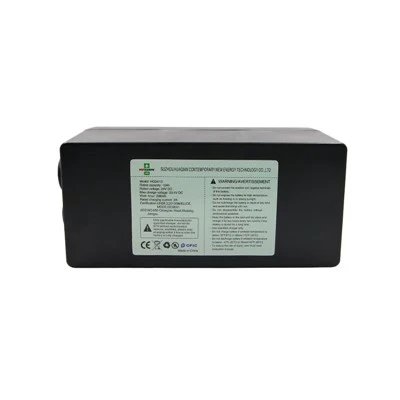
First, let’s start with a quick refresher for anyone who might be a little new to the game. LMO, or lithium manganese oxide, is one of the oldest and most reliable cathode chemistries out there. It’s cheap, thermally stable (way less likely to overheat than NCA or some high-nickel chem), has great power density—perfect for things like power tools, e-bikes, medical devices, even some backup power systems. But like every battery, it fades over time. Capacity fade is just the gradual loss of ability to hold a charge, right? A brand new LMO cell might deliver 2.5 Ah, but after 500 charge cycles, that drops to 2.1 Ah, and after 1,000, maybe only 1.7 Ah. The question is: why? Because it’s not a single thing—fade is a combination of several micro-level reactions that happen inside the cell, most of which we’ve observed firsthand when we tear apart old test cells after a year of field use.
Let’s start with the big one: manganese dissolution. This is probably the most common and widely documented fade mechanism for LMO, and it’s something we’ve spent years optimizing to cut down on. Here’s how it works. The LMO cathode is made of tiny, porous particles of LiMn₂O₄, right? Those particles hold onto the lithium ions that move back and forth during charge/discharge. But when the cell is operating, especially if it’s exposed to high temperatures (like sitting in a hot garage for months, or being used in a desert climate) or charged/discharged at super high rates (think: a power tool running at full tilt for 10 minutes straight), the crystal structure of the LMO cathode starts to break down a little. The manganese atoms in that structure leach out, or “dissolve,” into the liquid electrolyte that’s sloshing around the cell. Once those Mn ions are in the electrolyte, they don’t just hang out—they move to the anode side (that’s the graphite part, usually) and plate onto the surface. That plated manganese gets in the way of lithium ions trying to move between cathode and anode, so less charge can be stored and transferred. We’ve seen this firsthand in our 12-month field test of e-bike packs: the packs that were used in Arizona (average daily high 95°F) lost 12% more capacity than the identical test packs used in the Pacific Northwest, and when we analyzed the cathodes from the Arizona packs, they had 20% less manganese left than the NW ones.
Another big culprit: electrolyte decomposition. Electrolyte is the “blood” of the battery—it’s the stuff that carries lithium ions between cathode and anode. But over time, especially when the cell is pushed hard, that electrolyte starts to break down. There are two main ways this happens with LMO: one is at the cathode surface, the other at the anode. At the cathode, when manganese dissolves (like we just talked about), those Mn ions act like little catalysts that speed up electrolyte breakdown. The byproducts of that breakdown are stuff like gas, tiny solid particles, and new compounds that build up on surfaces. That layer on the cathode is called a cathode-electrolyte interphase (CEI)—wait, but not the good kind of CEI. A normal, stable CEI is thin and helps protect the cathode, but the bad kind that forms when manganese is around is thick, uneven, and blocks lithium ions from getting into the cathode particles. On the anode side, you’ve got the solid-electrolyte interphase (SEI)—that’s the layer that’s supposed to form once during the first few cycles to protect the anode. But when manganese from the cathode gets plated onto the anode, it messes up that SEI. It breaks the SEI apart, and then new, thicker SEI layers form non-stop during every cycle. Those extra layers use up lithium ions that would otherwise go into storage, so that’s another hit to capacity. We once had a customer with a fleet of power tools that were used in a bakery (super humid and warm) who called us saying their batteries were dying in half the time. When we tore apart a few old cells, the SEI layer on the anode was 3x thicker than what we see in our standard test cells, all because of electrolyte breakdown triggered by high heat and humidity.
Next up: structural degradation of the LMO cathode itself. The LiMn₂O₄ crystal structure isn’t perfect, and it has a little quirk called the Jahn-Teller effect. For anyone who doesn’t know chemistry jargon, that’s when the manganese ions (which are in a +3 oxidation state) get distorted in the crystal lattice when lithium is extracted during discharge. Over hundreds and thousands of cycles, that distortion adds up, and the crystal structure starts to crack and crumble. Those tiny cracks mean that some of the lithium ions get trapped inside the broken-off chunks of cathode material, so they can’t move back and forth during charge/discharge. We’ve seen this in our long-cycle test cells: after 1,500 cycles, 10-15% of the LMO cathode particles were cracked, compared to less than 2% in cells that were cycled at lower rates and moderate temperatures. And it’s not just cycling—even sitting unused, a cell left fully charged for months will go through this structural degradation a little faster, because the cathode is at a higher voltage, which makes the Jahn-Teller distortion worse.
Wait, let’s not forget about lithium inventory loss. That’s a fancy way of saying the cell is using up its available lithium ions over time, and they’re not coming back. We touched on this with SEI and CEI buildup, but there are more ways lithium gets trapped or consumed. For example, if the cell is overcharged (something that happens more often in cheap, unregulated chargers), extra lithium ions get forced out of the cathode and plate onto the anode as metallic lithium. That metallic lithium reacts with the electrolyte to form more SEI, or even builds up into little “lithium dendrites” that can pierce the separator (though that’s more of a safety issue than capacity fade, it still takes up lithium). Also, if a cell is left deeply discharged for too long (like an e-bike battery that’s left at 10% charge for six months), that can cause side reactions that consume lithium ions too. We always tell our customers: don’t leave your LMO batteries fully charged or fully discharged for long periods, and use a quality charger—this is why.
Now, here’s the thing: as a LMO battery supplier, we don’t just throw our hands up and say “fade is inevitable.” We’ve spent years working on fixes to slow down all these mechanisms. For example, we coat our LMO cathode particles with a thin layer of metal oxide (like alumina or zirconia) to protect the surface from manganese dissolution and electrolyte breakdown. We also tune the electrolyte formula—add additives that stabilize the SEI and CEI layers, so they don’t get thick and block ions. And we optimize our cell manufacturing process, making sure the LMO particles are as uniform as possible to reduce Jahn-Teller distortion and cracking. Our test cells have a 1,000-cycle capacity retention of 85%, which is way above the industry average for standard LMO cells, and we credit that to these small tweaks that address each fade mechanism head-on.
But even with all that, fade is still going to happen, right? That’s just the nature of batteries. The key is understanding what’s causing it so you can maximize your battery’s lifespan, whether you’re a consumer using an e-bike, a small business with a fleet of power tools, or someone who needs backup power for your home. Some quick tips from our team: keep your batteries at moderate temperatures (if you can, store them at 40-60% charge when not in use, not full or empty), use a charger specifically designed for LMO cells (avoid generic, no-name chargers), and don’t cycle them at super high rates for things they’re not designed for (like running a high-draw power tool on a low-capacity battery all day).
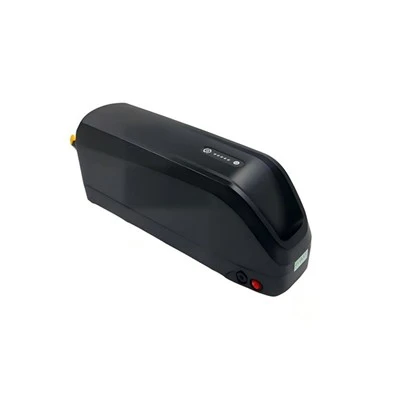
At the end of the day, LMO is still a fantastic chemistry for a lot of applications, especially when paired with our optimized cells that are built to minimize fade. If you’re in the market for LMO batteries—whether it’s for consumer electronics, power tools, e-mobility, or any other use—we’ve got you. Our team has years of real-world experience, not just lab data, so we can help you pick the right cells for your application, troubleshoot any performance issues, and make sure you get the longest possible life out of your batteries. Don’t hesitate to reach out and chat about your needs—we’re here to help.
NCM Lithium Battery References
- Zhang, Z., et al. (2018). Manganese dissolution mitigation in spinel LiMn2O4 cathodes for lithium-ion batteries. Journal of Power Sources, 396, 122-131.
- Tarascon, J. M., & Armand, M. (2001). Issues and challenges facing rechargeable lithium batteries. Nature, 414(6861), 359-367.
- Liu, Y., et al. (2020). Capacity fade mechanisms of LiMn2O4/graphite lithium-ion cells under high temperature cycling. Electrochimica Acta, 354, 136678.
- Xu, K. (2014). Electrolytes and interphases in Li-ion batteries and beyond. Chemical Reviews, 114(23), 11503-11618.
Suzhou Huaqian Contemporary New Energy Technology Co., Ltd.
As one of the most professional lmo lithium battery manufacturers and suppliers in China, we warmly welcome you to wholesale bulk customized lmo lithium battery at competitive price from our factory. If you have any enquiry about cooperation, please feel free to email us.
Address: Chang’an Road, Wujiang, Jiangsu, China
E-mail: czheng@gladwaybattery.com
WebSite: https://www.gladwaybattery.com/
