If you’ve ever spent time sourcing equipment for mineral processing, ceramic manufacturing, or even lab-scale material testing, you’ve probably asked yourself the same question: “Where can I buy a ball mill that actually fits my needs?” As someone who’s spent 12 years in the ball mill industry—first troubleshooting machines in mines, then helping small and medium-sized manufacturers source reliable grinding gear—this is the question I get more than any other. It’s not a simple answer, and I’ve seen too many buyers waste time and money on mills that were too big, too fragile, or just not built to last. That’s why I’m breaking down the best places to find a quality ball mill, plus what to look for to avoid common mistakes—straight from someone who’s both a supplier and a former end-user. Ball Mill

First, let’s get one thing straight: a ball mill isn’t a random tool you pick up at a home improvement store. It’s a precision grinding machine that turns large chunks of material into fine powder, and the right one depends entirely on what you’re using it for. A lab-scale mill for testing new ceramic glazes is way different from a 50-ton per hour mill for grinding iron ore. So when you’re asking where to buy, start with narrowing down your use case before you even look at vendors. That said, here are the most reliable places to source a ball mill, in my experience.
The first and most trustworthy option is working with a specialized, experienced ball mill supplier—someone who focuses exclusively on grinding equipment, not a general industrial supplier that carries 100 different types of machines. Early in my career, I worked at a small mineral processing plant that bought a mill from a general supplier that had never sold a grinding machine before. It broke down three times in the first six months, and the replacement parts took 10 weeks to arrive. That’s when I learned: niche suppliers know their products inside and out. They don’t just sell you a machine—they can help you calculate the correct diameter-to-length ratio, recommend the right lining material (rubber for soft ores, steel for hard ones), and even adjust the speed so you get the exact grind size you need. As a ball mill supplier myself, I can tell you that we don’t just quote a price and walk away. We ask about your production volume, the hardness of your feed material, whether you need wet or dry grinding, and even if you have limited floor space. Those details make all the difference between a mill that runs for 10 years without major issues and one that’s a constant headache.
But wait, what if you’re on a tight budget or need a smaller mill for a one-off project, like a university lab testing new battery materials? That’s where reputable used equipment markets come in. Not all used mills are junk—some are only a few years old, retired because a mine scaled back production, not because they were bad machines. The key here is to work with dealers that inspect every used mill before putting it up for sale. I’ve seen buyers save 40% on a used ball mill that only needed a new lining, which was easy to install. But avoid buying from private sellers on general marketplaces unless you know exactly what to check. Look for signs of excessive wear on the trunnion (the hollow shaft that rotates the mill), cracks in the shell, or a motor that’s underpowered for the mill size. A good dealer will provide maintenance records and a short warranty, so that’s non-negotiable.
Another option, especially if you’re looking for a custom solution, is working with engineering firms that design and manufacture ball mills. If your project is unique—say, you need a mill that’s enclosed to control dust for pharmaceutical grinding, or one with a special discharge system for ultra-fine ceramic powders—general suppliers might not be able to adjust their standard models. We’ve helped a few custom clients over the years, like a tile manufacturer that needed a mill with a smaller footprint to fit their existing production line, so we modified the length and added a variable speed drive. The downside here is that custom mills can take longer to build and cost more, but for specialized applications, it’s worth it. Just make sure the engineering firm has a track record with ball mills, not just general industrial engineering.
Now, I know some of you might be thinking about online marketplaces like Alibaba or Grainger for smaller, lab-scale ball mills. I get it—they’re convenient, and you can compare prices easily. But here’s the thing: when it comes to industrial equipment, convenience often comes with trade-offs. I’ve heard from so many clients who bought a small lab mill from a marketplace supplier that promised 99% fine grind, but it could only get 85% because they used low-quality grinding media and a weak motor. When they tried to get support, the supplier ghosted them. If you do go the marketplace route, stick to suppliers with verified reviews specifically for ball mills, not just general product reviews. And ask for a test run, if possible—many small lab mills can be tested at the supplier’s facility before shipping.
No matter where you decide to buy, there are a few non-negotiables you need to check before signing a contract. First, confirm the mill’s capacity. A lot of suppliers quote “nominal capacity,” which is the maximum it can do under perfect conditions. Make sure you ask for the actual capacity at your specific grind size. For example, a mill that’s rated for 10 tons per hour of limestone might only do 7 tons per hour of granite, which is way harder. Second, ask about parts availability. Ball mills have wearing parts—linings, grinding balls, gears—so you need to make sure those parts are easy to source quickly, otherwise a week of downtime could cost you thousands. Third, check for after-sales support. Can the supplier send a technician to install and train your team? Do they offer emergency service if something breaks? I’ve had clients buy mills from abroad that took three months to get a technician on-site, which put their entire production behind schedule. As a supplier, we include on-site installation for all large mills and offer 24/7 support for emergency calls, because we know a mill not running is lost revenue for our clients.
Let me also address a common misconception: more expensive doesn’t always mean better, and cheaper doesn’t always mean worse. I’ve sold mills that were a bit pricier than competitors, but they had thicker steel shells and higher-quality bearings, so they ran quieter and lasted longer. I’ve also sold a budget lab mill to a small startup that was perfect for their needs, because they didn’t need heavy-duty industrial components. The key is matching the mill to your specific needs, not just picking the cheapest or most expensive option.
If you’re still unsure where to start, my advice is to skip the random online searches and narrow down your requirements first. Write down what material you’re grinding, the desired final size, your daily production needs, and any space or environmental constraints. Then reach out to suppliers that specialize in ball mills, share those details, and ask for a detailed quote that includes parts availability and support. That’s how you avoid the common pitfalls that I’ve seen so many buyers fall into over the years.
Look, I’ve been in this industry long enough to know that buying a ball mill can feel overwhelming. There’s so much to consider, and the wrong choice can derail your project or your production line for months. But it doesn’t have to be. Whether you’re looking for a small lab mill for testing, a large industrial mill for mining, or a custom mill for a unique application, the best place to start is with a supplier that understands grinding, not just selling. At our company, we’ve helped hundreds of clients across industries find the right ball mill, and we stand behind every machine we sell. If you’re ready to stop guessing and start talking to someone who can help you find the perfect mill for your needs, don’t hesitate to reach out for a detailed consultation. We’d be happy to walk through your requirements, answer any questions, and make sure you get the equipment that fits your business, not the other way around.
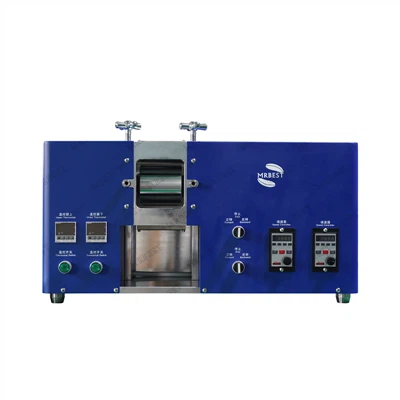
When it comes to sourcing industrial equipment, experience matters. Don’t settle for a supplier that treats your mill like just another product. Work with someone who knows the ins and outs of ball mills, who has your back long after the sale, and who can help you make a decision that works for your budget and your production goals. That’s the kind of partner you need for a ball mill—and that’s exactly what we offer.
Battery Cells Heat And Cold Press References:
- Gupta, A., & Yan, D. S. (2016). Mineral Processing Design and Operations. Elsevier.
- Hellmann, H., & Schwedes, J. (2002). Grinding and Classification Techniques for the Ceramics Industry. Springer.
- Partel, S., & Benzer, H. (2019). Selection and Sizing of Ball Mills for Mineral Processing Applications. Minerals Engineering.
- Jones, M. H. (2021). A Guide to Lab-Scale Milling Equipment for Material Testing. Journal of Laboratory Automation.
Shenzhen Meirui Zhida Technology Co., Ltd.
Shenzhen Meirui Zhida Technology Co., Ltd. is one of the most professional ball mill manufacturers and suppliers in China, specialized in providing high quality products with low price. If you’re going to buy bulk discount ball mill made in China, welcome to get pricelist and quotation from our factory.
Address: 104 Building 6, Second Industrial Zone, Shanmen Community, Yanluo Street, Baoan District, Shenzhen China
E-mail: mrbest@szmrbest.com
WebSite: https://www.szmrbest.com/
