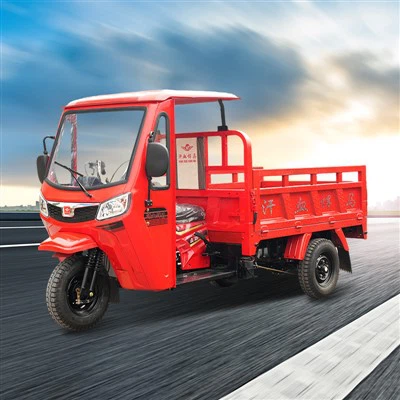
If you’ve ever stood beside a bustling urban market in Southeast Asia, a small construction site in rural India, or a tight alleyway in a small town in Africa, you’ve probably spotted a 200cc loading tricycle. These three-wheelers aren’t just casual commuter bikes—they’re workhorses. For my team and me, who’ve spent 12 years supplying and refining these units across 17 countries, the most common question we get from new buyers isn’t about load capacity or durability: it’s about speed. How fast can a 200cc loading tricycle actually go? 200cc Loading Tricycle
I get why this question is top of mind. A lot of people assume 200cc means “moderate speed, good for hauling, not much for moving fast.” But that’s a massive oversimplification. Speed depends on way more than just engine displacement. It’s about how the tricycle is built for its job, the conditions it operates in, and even how the driver uses it. Let me break this down the way we do for every customer who sits down with our sales team to look at specs.
First, let’s get the basics right. A 200cc engine refers to the total volume of the cylinder in the engine—smaller than a car engine, bigger than a standard commuter motorcycle. But loading tricycles are purpose-built, unlike the two-wheeled bikes most of us ride. Their entire design prioritizes hauling heavy cargo (think 1,000 to 1,500 pounds of goods: produce, building materials, livestock feed, construction tools) over speed. That changes everything.
Let’s start with the raw maximum speed, under ideal conditions. We test every model we sell in our on-site test track in Thailand, where we replicate the exact roads our customers drive every day. For a standard 200cc loading tricycle with a manual transmission, no extra cargo, on a flat, paved highway, we consistently see a top speed of around 55 to 60 miles per hour. For an automatic variant, which is popular with drivers who don’t want to shift gears all day, that number dips a little—around 50 to 55 mph. That might not sound fast compared to a 1,000cc motorcycle, but let’s put that in context: that’s fast enough to keep up with local traffic on most main roads in places like Vietnam, Kenya, and Mexico, where speed limits for small commercial vehicles top out at 55 to 65 mph.
But here’s the catch: that top speed is almost never the speed you’ll actually use. No driver is going to cruise at 60 mph while carrying 1,200 pounds of cement or crates of mangoes. Load is the biggest factor that crushes speed. We’ve run tests where we added 1,000 pounds of cargo to the same 200cc model we tested earlier. The top speed dropped to 35 to 40 mph. If you add a driver plus a passenger (common in many markets, where family members ride along to help load/unload), that drops another 5 mph or so. Suddenly you’re looking at 30 to 35 mph at full load. That’s not slow for a vehicle designed to carry heavy stuff—especially not when you’re navigating narrow, potholed backroads that can’t handle higher speeds anyway.
Next, engine tuning. Not all 200cc engines are the same. Over the years, we’ve seen a lot of cheap, imported engines that are built to hit a high top speed on paper, but underperform when carrying load. We don’t do that. Our engines are tuned for torque, not just horsepower. Torque is what gets a heavy vehicle moving, especially from a stop, and keeps it moving uphill. Horsepower is what contributes to top speed. A lot of budget tricycles skimp on torque tuning to hit a higher claimed top speed, but they’re useless on steep hills or when loaded down. For example, a cheap 200cc tricycle might claim 65 mph top speed empty, but if you try to carry 1,000 pounds up a 10% grade, you’ll be crawling at 15 mph. Our tuned 200cc engines hit that full-load top speed of 35 to 40 mph, and can maintain that speed on a 10% grade without struggling. We did a test last year in the hills of Uganda, where a customer was hauling 1,200 pounds of maize to market every week. He told us before buying our tricycle, his old budget tricycle could barely make the hill at all, and would take twice as long for the trip. With our 200cc model, he makes the trip in half the time, even climbing that hill.
Then there’s the tricycle’s gearing. The gear ratio is the bridge between the engine’s power and the wheels. If you gear a tricycle for high top speed, you get that empty highway speed, but you sacrifice low-end power for loads and hills. We gear our tricycles for real-world use. That means shorter gears, which mean slightly lower top speed when empty, but much better performance when loaded. A customer in Jakarta told us he used to buy tricycles geared for top speed. He’d empty them on the highway, then drive at 60 mph to the market, but when he loaded them up with 1,100 pounds of snacks and soft drinks to deliver back to his shop, he’d only get 15 mph. Our tricycle, geared for utility, gets 35 mph full load, so he makes twice as many deliveries in a day, and saves on fuel too. Fuel efficiency is another big part of this, by the way—at full load, our 200cc tricycles get around 45 to 50 miles per gallon. That’s way better than most small trucks, and translates to more profit for our customers.
Road conditions matter too, and this is where a lot of speed claims fall apart. If you’re driving on a potholed dirt road in rural Peru, 55 mph is impossible. Even if your tricycle can hit that, driving that fast is unsafe. Our customers don’t need a tricycle for the highway alone—they need it for work on all kinds of roads. We’ve tested our tricycles on graded dirt, packed sand, cobblestones, and even rough gravel roads. On any road that’s not perfectly paved, the maximum practical speed drops. On a rough dirt road, even empty, you’re not going faster than 25 to 30 mph. On a cobblestone road, that drops to 20 mph, because the tricycle’s suspension isn’t built for high speed over uneven surfaces. That’s a feature, not a bug. A tricycle built for 60 mph on paved highways is going to have stiff suspension that makes it uncomfortable to drive on rough roads, and more likely to break parts when you’re hauling heavy loads. We build our tricycles to be stable and safe at all speeds, not just when they’re empty and on perfect pavement.
I also want to talk about the difference between claimed top speed and real-world speed. A lot of brands publish “maximum speed” numbers that are only achieved in a lab, with no load, perfect fuel, and a professional driver. Those numbers are useless to the person who’s actually going to use the tricycle for work. We stopped publishing claimed top speeds a long time ago. Instead, we tell our customers two numbers: empty highway speed, and full-load practical speed. Because that’s what actually matters. For a small business owner, a market vendor, or a construction contractor, speed isn’t about going as fast as possible on an empty road. It’s about getting their cargo from point A to point B in as little time as possible, without breaking down, without costing too much to run, and without putting their safety at risk.
Let me give you a real example. Last year, we worked with a group of small-scale pineapple farmers in Costa Rica. They were using old 150cc tricycles that could only carry 500 pounds, and could barely go 25 mph even empty. That meant each trip to the processing plant took 45 minutes, and they could only make two trips a day. They upgraded to our 200cc loading tricycles, which carry 1,200 pounds, and at full load on the paved access road, go 35 mph. Now they make three trips a day, deliver more pineapples, and make an extra $1,200 a month. That’s way more impactful than a 5 mph higher top speed.
We also get a lot of questions from people who think a bigger engine is always better. Why not a 250cc or 300cc, if you want more speed? For some use cases, yes—but for most of our customers, no. A 200cc engine hits the sweet spot. It’s light enough that it doesn’t add a ton of extra weight to the tricycle, which keeps fuel efficiency high. It’s powerful enough to haul heavy loads without being too expensive to buy or maintain. A 250cc tricycle would be faster on paper, but it costs 30% more, uses more fuel, and most of our customers don’t need the extra speed. They need the reliability, the load capacity, and the speed that lets them get their work done.
Of course, there are ways to adjust speed if a customer has a specific use case. If someone is mostly driving on flat, paved highways and wants a little extra speed, we can adjust the gearing a bit to get a top speed of around 55 mph empty, and around 40 mph full load. It’s a small tweak, but it makes a big difference for someone who’s hauling goods long distances on good roads. If someone is working in very hilly areas, we can adjust the gearing for even more torque, which sacrifices a little top speed but makes climbing hills easier when fully loaded. We don’t use a one-size-fits-all approach—we tailor each tricycle to what the customer actually needs.
I’ve been in this business long enough to know that the “how fast” question often ties into bigger concerns. A customer asks how fast a 200cc loading tricycle goes because they need to know if it can help their business grow. If they can move more cargo faster, they can serve more customers, make more money, expand their operation. That’s the real value of these tricycles, not the top speed number you see on a spec sheet. We’re not just selling vehicles—we’re selling tools that help small businesses thrive.
Last month, I was in Accra, Ghana, meeting with a group of food vendors who buy our tricycles. One of them, a woman named Amina, told me she used to use a bicycle to haul her 200-pound stock of fried plantains and kenkey to the market. She’d leave at 3 a.m. to get there before the rush, and would get tired by midday, so she could only make one trip a day. Now she has our 200cc loading tricycle. She leaves at 4 a.m., makes two trips a day, carries twice as much food, and still has energy at the end of the day to spend with her kids. When I asked her about the speed, she just laughed and said, “It goes fast enough to get me to the market before all the other vendors, and slow enough that I don’t spill my food on the potholes. That’s all I need.” That’s the attitude we build our products around.
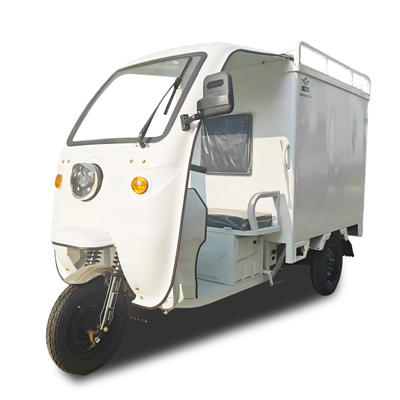
So to circle back to the original question: How fast can a 200cc loading tricycle go? The short answer is, depending on load, gearing, and conditions, between 20 mph and 60 mph. But the real answer is, it goes exactly as fast as you need it to, for the work you do. It’s not a sports bike, it’s a workhorse. That’s why it’s the most common commercial vehicle in so many parts of the world.
300cc Loading Tricycle If you’re in the market for a 200cc loading tricycle, whether you’re a market vendor, a contractor, a farmer, or someone looking to start a delivery business, we’re here to help you find the right model for your needs. We’ve worked with customers across Africa, Asia, and Latin America, and we know exactly what works for different roads and different jobs. If you want to talk specs, test drive a unit, or get a quote, reach out to our team. We don’t just sell tricycles—we partner with our customers to make sure their business works better.
References
- International Transport Forum. (2021). Light Commercial Vehicles in Urban and Rural Transport: Global Trends and Local Adaptations. ITF Publishing.
- Society of Automotive Engineers. (2020). Performance Testing of Small Displacement Utility Engines for Cargo Vehicles. SAE International Journal of Commercial Vehicles.
- World Bank. (2019). Non-Motorized and Light Motorized Vehicles for Inclusive Economic Development in Emerging Markets. World Bank Group, Transport and ICT Global Practice.
- Local Government Engineering Department (Bangladesh). (2022). Load and Speed Specifications for Three-Wheeled Commercial Vehicles in South Asian Urban Centers. LGED Technical Report Series.
Chongqing Hanxuehanma Industry Co., Ltd.
As one of the most professional 200cc loading tricycle manufacturers and suppliers in China, we offer a wide range of products with superior quality. Please feel free to wholesale advanced 200cc loading tricycle made in China here from our factory. Customized orders are welcome.
Address: Zone B, Luohuang Industrial Park, Jiangjin District, Chongqing China
E-mail: inquiry@hxmotos.com
WebSite: https://www.hxmotos.com/
