Hey guys, it’s Jake from your go-to power cable supplier, and today I’m answering a question I get at least once a week: “Can I use a power cable with a different flexibility than the one that came with my device or machine?” Let’s cut to the chase—this isn’t a yes/no answer. It depends on way more than just how bendy the cable is, and as someone who’s been working with power cables for over 10 years, I’ve seen people mess this up way too often. Let’s break it down like we’re chatting at a trade show, no boring jargon, I promise. Power Cable
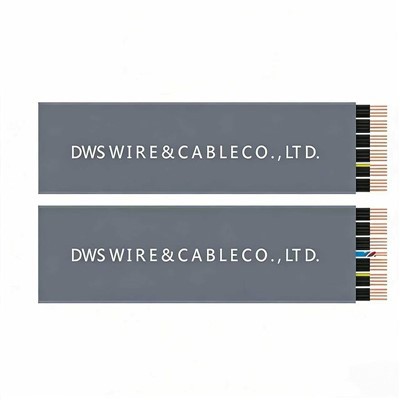
First, let’s get one thing straight: power cable flexibility isn’t just about “feel.” There’s actual engineering behind it. The flexibility of a cable comes from two main things—what the conductor inside is made of, and how thick the insulation/jacket around it is, plus the overall construction. For example, a super flexible cable has conductors made of tons of tiny, twisted copper strands, right? Like, way more than a rigid cable. That makes it easy to bend and twist without breaking the copper. A stiffer cable might have fewer, thicker strands, or even solid copper, which is cheaper to make but way less bendable.
Now, the big question: can you swap a less flexible cable for a more flexible one? Or vice versa? Let’s start with the vice versa first—stiffer cable for a more flexible one. Most of the time, that works, but only if you don’t push limits. Wait, why? If your application doesn’t need constant bending, a stiffer cable can handle it just fine. Like, say you have a table saw that’s plugged into a wall, and the original cable was super flexible because it needs to move around as you cut. If you grab a stiffer cable for it, that’s probably okay—unless you’re yanking the saw around every 10 seconds, then the stiff cable might crack over time. But here’s the catch: don’t go too stiff. If a cable is way thicker or stiffer than what’s rated for your device, it might not fit through the cable gland (that little rubber/metal thing that seals the cable into your machine) properly. I’ve had a customer send me a message last year saying he bought a cheap stiff cable for his CNC machine, and it wouldn’t fit through the gland—had to cut the end off, strip the wires, and re-terminate, which wasted hours. Oops.
Now the other way around: swapping a stiff cable for a more flexible one. This is where I see the most mistakes, and the most failures. If your original cable is rated for constant movement—like in a robotic arm, or a portable generator that you drag around all day, or a conveyor belt that moves back and forth every few seconds—you can’t just use a stiff cable. Wait, but why? The conductors in a stiff cable aren’t built for repeated bending. Every time you bend a cable, the copper strands flex a little. If they’re thick and few, they’ll break from metal fatigue way faster. I had a regular customer last month—he runs a packaging plant, and he used stiff cables for his conveyor belt modules. Within 3 months, half the cables failed because the conductors snapped from bending. When he called me, I told him, “Dude, those conveyor belts move nonstop—you need flexible cable for that.” He swapped them out, and now it’s been 6 months without a single failure. That’s the real stuff, not just theory.
But here’s the part most people miss: flexibility isn’t the only spec you need to match. You can’t just grab any flexible cable and plug it in. You have to check three key things first: voltage rating, current carrying capacity (ampacity), and insulation/jacket rating for your environment. For example, if you’re using a cable outdoors that gets rained on, you need a flexible cable with UV-resistant jacket. If you’re using it in a factory with chemicals, you need one that’s oil-resistant. I had a guy call me once, he used a flexible ethernet cable (wait, no, power cable—sorry, he used a flexible power cable from his home office for his outdoor lawnmower). The cable was flexible, but the jacket wasn’t UV-resistant, so after a week, it cracked, exposed the wires, and almost caused a fire. Yikes. Don’t do that.
Another thing to consider: temperature. If your equipment operates in extreme heat—like a furnace room, or a bakery oven hood area—you can’t use a flexible cable that’s rated for room temperature. The flexible insulation might melt or break down in high heat, even if the cable is bendy. I stock a whole line of high-flex, high-temperature cables for exactly that reason. A lot of customers see “flexible” and think it’s only for movement, but it’s also about the insulation material.
Wait, what about short-term vs. long-term use? If you’re just setting up a temporary event, like a pop-up shop, and you need a cable that’s easy to move around, a more flexible one is perfect. But if it’s a permanent installation, you don’t need to go overboard with flexibility—save the high-flex stuff for applications that actually move. It’s a waste of money, because high-flex cables are a little more expensive than standard stiff ones. I always tell customers, “Match the flexibility to your use case, not just ‘I want it bendy.’”
Let’s talk about the myth that more flexible = better. That’s not true at all. Like, if you have a light bulb in a lamp that stays plugged in 24/7, and you use an ultra-flexible cable for it, that’s fine, but you’re paying extra for a feature you don’t need. It’s like buying a sports car to drive to the grocery store—cool, but unnecessary. On the flip side, if you need that high-flex cable and you skip it because it’s “more expensive,” that’s a false economy. You’ll end up replacing it way more often, which costs you more money in the long run.
I also get asked a lot, “Can I combine different flex ratings? Like, use a semi-flex cable for a part that bends sometimes, and a stiffer part for a part that doesn’t?” Absolutely, as long as the specs match. For example, a robotic arm might have sections that move a lot (so high-flex cable) and sections that are fixed (stiffer cable). You just have to make sure the voltage and ampacity are the same for both cables—don’t hook a higher amperage component to a lower ampacity cable, even if it’s flexible.
Another real-world example: I had a customer in the construction industry who uses power cables for his portable generators. He was using standard stiff cables, and they were getting damaged all the time when workers tripped over them. He swapped to a flexible, heavy-duty cable, and now they’re way less likely to kink or break when someone steps on them. That’s a perfect case where swapping to a more flexible cable makes total sense, because the application needs constant movement and durability.
But let’s cover the edge cases where you should never swap flexibility. If your cable is part of a safety-critical system—like a medical device, or a power grid connection—do not mess with the flexibility rating. Those systems are engineered with specific cable specs for a reason. For medical equipment, a faulty cable could mean a life-threatening issue, so you have to use exactly what’s rated, no substitutions. Same with power lines—you can’t use a more flexible cable than specified, because the tension and load might not be correct, leading to outages or fires.
Wait, let’s get into the science a little, but keep it simple. Conductor strand count: a flexible cable might have 100+ tiny copper strands per conductor, while a stiff one has 7 or 19 larger strands. Each time you bend the cable, the strands slip and flex. Over thousands of bends, the small strands handle that way better than larger ones. That’s why high-flex cables are often called “flex cycle rated”—they’re tested to withstand like 100,000 bends without breaking. Stiff cables might only handle a few hundred or thousand bends before failing. So if your application has lots of bending, you need that flex cycle rating, not just a bendy feel.
Also, don’t forget about the cable’s bending radius. That’s a spec that tells you how tight you can bend the cable without damaging it. A more flexible cable has a smaller bending radius—meaning you can bend it sharper without breaking. A stiff cable has a larger bending radius, so you can’t bend it as tight. If you bend a cable beyond its rated bending radius, regardless of flexibility, you’ll damage the conductors and insulation. I’ve seen a customer bend a high-flex cable way too tight to fit into a small space, and it cracked the insulation instantly. Bending radius is non-negotiable, no matter how flexible the cable is.
So let’s wrap this up with actionable steps, because that’s what you care about. If you’re thinking about swapping a power cable for one with different flexibility:
- Figure out why you want to change the flexibility. Is it because the original is too stiff and hard to install? Too flimsy and breaking all the time? Or just want a different feel?
- Match all the core specs first: voltage rating, ampacity, insulation/jacket material (UV, oil, chemical resistant), temperature rating. Don’t skip these for flexibility.
- Check the bending radius of the new cable—it has to match or be smaller than what your application needs.
- For constant movement applications (robots, conveyors, portable equipment), go for a flex-cycle rated cable, not just a bendy one.
- For permanent, fixed installations, you don’t need ultra-flexible—save the extra cost for when you actually need it.
- Never swap flexibility for safety-critical or high-voltage applications—stick to the manufacturer’s specified cable.
Here’s the thing, as a supplier: I’m not here to sell you the most expensive flexible cable. I’m here to help you pick the right one for your job. I’ve seen too many people buy a “cool” flexible cable that doesn’t work for their needs, and end up frustrated. That’s why I always ask customers a million questions first: what’s the cable used for? Does it move? What’s the environment like? What’s the voltage and amp draw? That way, I can point them to the perfect cable, not just the bendiest one.
If you’re still unsure, or you have a specific application where you’re wondering if a different flexibility cable will work, hit me up. I can walk you through the specs, tell you what’s worked for other customers in the same industry, and make sure you don’t make a costly mistake. No hard sell, just real advice from someone who’s been doing this long enough to know what works and what doesn’t.
When it comes to power cables, flexibility isn’t a one-size-fits-all feature. It’s a tool, just like any other part of your equipment. Use it when you need it, and don’t waste money on it when you don’t. And always prioritize the core safety and performance specs over just how bendy the cable is.
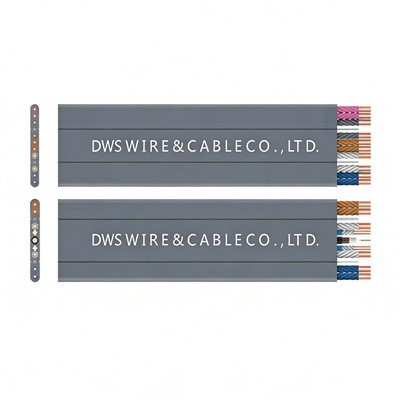
So that’s the lowdown, no fancy jargon, just real talk from someone who’s in the thick of power cables every single day. If you need help picking the right cable for your project, reach out—we’re here to make sure your setup works, no failures, no headaches.
Extension Cable References:
- Underwriters Laboratories (UL) Standard 62, for flexible power cable construction and testing
- IEC 60227, Specification for insulated cables for rated voltages up to and including 450/750 V
- Copper Development Association, Conductor Flexibility and Fatigue in Power Cables
Cixi Davos Wire & Cable Co., Ltd.
As one of the most professional power cable manufacturers and suppliers in China, we also support customized service. Please feel free to buy bulk high quality power cable in stock here from our factory. For price consultation, contact us.
Address: No.3, Lane 91, Ruan Ding Road, Linxi Village, Xiaolin Town, Cixi City
E-mail: roy798@163.com
WebSite: https://www.cj-supplychain.com/
