If you’ve ever stood in the cleaning supply aisle, staring at a pack of disposable mop refills, wondering if that $5.99 price tag is actually a waste of money, or if those little blue pads will last more than one meager spill before falling apart—you’re not alone. As someone who’s been on the ground floor of running a disposable mop refill supply business for the past seven years, I get the questions. Everyone wants to know: Is this thing just a fancy paper towel that crumbles after mopping a small kitchen, or is it built to actually clean a full-size floor without giving out? Today, I’m pulling back the curtain on the durability of our refills, sharing the science we use to test them, and the real-world data we’ve collected from thousands of commercial and residential users. No sales fluff, just the straight talk I wish I’d seen when I first started in this space. Disposable Mop Refill

First, let’s get one thing straight: “durability” for disposable mop refills isn’t the same as durability for a hardwood floor or a metal tool. These are single-use (or, in some cases, multi-use) cleaning products, designed to balance absorbency, scrub power, and structural integrity during use, before being safely disposed of. The biggest mistake people make is assuming all refills are created equal—they’re not. A lot of budget brands out there cut corners, using cheap pulp that falls apart at the first sign of water, or thin polypropylene that tears when you apply a little elbow grease to scrub a dried-on cereal spill. At our company, we test every refill we produce against three key metrics: tensile strength when wet, absorbency retention under load, and scrub fiber adhesion. That’s the science part, and it’s not as complicated as it sounds.
Let’s start with tensile strength when wet, because that’s the most common failure point. If you’ve ever mopped a sticky kitchen floor, grabbed the mop handle and watched the pad stretch, then tear right in the middle, you know how frustrating that is. Our lab tests this by submerging a 12×12-inch refill pad in 70°F water (the average home tap temperature) for 60 seconds, then clamping it to a digital strength tester that pulls at a consistent rate until the pad breaks. In our first year of business, we were using a mix of 70% virgin pulp and 30% recycled pulp, and our average wet tensile strength was 1.2 lbf (pounds of force). That meant if you applied more than that to scrub a spot, the pad would tear. We changed our pulp blend to 40% virgin softwood pulp and 60% post-consumer recycled pulp, adding a light synthetic cross-layer that binds the pulp fibers together without making the pad stiff. Now our average wet tensile strength is 3.8 lbf—triple what it was that first year. To put that in real terms, that’s enough force to scrub a 2×2 foot area of concrete floor with dried-on tomato sauce, no tearing. We also test for wet tensile strength after multiple uses, because some of our residential customers like to reuse their refills for quick touch-ups. Our pad holds up to three separate mopping sessions (each lasting 5 minutes, with the pad rinsed and reattached to the mop between uses) before the tensile strength drops below 2 lbf. That’s a big difference from most budget refills, which often fall below 2 lbf after just one use even for light cleaning.
Next, absorbency retention under load. This is another metric that’s easy to overlook, but it’s what determines how much liquid the pad can hold before it leaks out onto your clean floor, or soaks through to the mop head. The test here is simple: we take a pre-weighed dry pad, submerge it in water for 2 minutes, then hang it vertically for 10 minutes to drain excess surface water, then weigh it again. That gives us total absorbency. But to test retention, we press a 100lb weight (simulating the pressure a person applies when mopping) onto the saturated pad for 1 minute, then weigh it again. The difference between the two weights is how much liquid the pad keeps under pressure. Our average for this test is 82% absorbency retention. That means if a pad absorbs 1.5 liters of water, it only loses 0.27 liters when you apply pressure while mopping. Compare that to a budget refill, which often has a 55-65% retention rate—by the time you mop a standard kitchen (150 square feet), the pad has leaked enough water to leave a puddle behind, making you re-mop the area. We’ve done field tests with 200 residential users over the past two years, asking them to mop their 1,200-square foot homes with our refills, and 89% said they only needed one pad for the entire floor, with no leaks or streaks. Only 7% needed two pads, usually for extra-tiny bathrooms or large pet water spills. That’s way better than the 60% of users who told us they needed two or more pads with their previous budget brand.
The third metric is scrub fiber adhesion, which is what makes the pad effective for tough messes. A lot of disposable refills have a layer of short polypropylene fibers on the front that’s meant to scrub dirt, but if those fibers aren’t bonded securely, they’ll peel off in clumps halfway through mopping. Our test here is to run a pad over a 1 square foot area of concrete that’s been coated with 100 grams of dried coffee grounds, scrubbing back and forth 20 times, then count how many fibers are left on the pad. We also test for fiber adhesion when wet, because water softens the adhesive layer. Our average is 98% fiber retention after 20 wet scrub cycles. That means you don’t have to worry about little bits of plastic fiber getting stuck in your grout or on your floor when you mop. In our first field test with commercial clients, a local coffee shop tried our pads for cleaning their spill-prone lobby floor. The manager reported that a pack of 10 pads lasted them a full week, instead of the 7-8 pads they were going through with their old brand, because the scrub fibers didn’t fall off mid-use. That translated to both cost savings and less time spent mopping, which was a win for their team.
Now, let’s talk about what this means in real-world terms, because lab tests don’t matter if they don’t hold up in your home or business. For residential users, our disposable mop refills are designed to handle standard cleaning tasks: mopping a 1,500-square foot home with regular spills, tracked-in dirt, and sticky messes from kids or pets. Most users will get one full mopping session (30-45 minutes of active use) out of a single pad, with no tearing, leaking, or loss of scrub power. For light touch-ups (like cleaning up a spilled glass of juice or a small area of dust), you can reuse the same pad two or three more times, as long as you rinse it thoroughly and let it dry between uses. We do recommend tossing it when it starts to feel stiff or starts to smell, which usually happens after 3-4 uses.
For commercial users—cafés, offices, retail stores—our refills are engineered for higher traffic and more frequent cleaning. A single pad can handle up to 2,000 square feet of floor space, including scrubbing high-traffic areas like entryways (where people track in dirt and salt in the winter) and wiping up small spills throughout the day. We’ve worked with a chain of 12 local grocery stores, and their operations team reports that our refills cut their mop supply costs by 22% compared to their previous disposable pad brand, because the pads last longer through each cleaning shift, and they don’t have to replace them mid-shift as often. Of course, heavy-duty commercial use (like a large warehouse floor with heavy machinery oil spills) is a different story—we make a specialized industrial grade refill for that, which has a higher tensile strength and is made with thicker fibers, but that’s a separate product line.
I know what some of you are thinking: “This all sounds great, but what about sustainability? I thought disposable products were bad for the environment.” That’s a fair question, and it’s one we take very seriously at our company. The durability of our refills isn’t just about how long they last while cleaning—it’s about not wasting products. A budget refill that falls apart after half a floor means you’re buying more pads than you need, which adds to both your cost and your environmental footprint. Our pads are made with 60% post-consumer recycled pulp and 100% recyclable synthetic fibers (we’ve chosen a polypropylene blend that’s widely accepted for recycling programs, unlike some disposable pads that use mixed plastics), so when you’re done with a pad, you can toss it in your recycling bin (check with your local program to be sure) instead of the trash. We’ve also calculated that each of our refills has a 15% lower carbon footprint than the average disposable mop pad, because they last longer, so you use fewer total pads over time. We don’t claim our products are “zero waste” or “compostable” (they’re not, because of the synthetic scrub layer), but we do work hard to make them as durable and sustainable as possible, without sacrificing performance.
Over the years, we’ve heard every complaint under the sun about disposable mop refills: “They tear when I try to use them,” “They leak all over my floor,” “They don’t scrub anything off.” Most of those complaints come down to two things: either the brand is using cheap materials, or the user is expecting a disposable pad to perform like a traditional cotton mop, which never breaks down. The key takeaway here is that not all disposable refills are the same, and durability is about how the pad is constructed, not how much it costs. For our part, we test every batch of refills before they leave our warehouse, and we’ve never cut corners on the materials that matter most for strength and performance. We also have a 100% satisfaction guarantee—if you try our refills and they don’t live up to the durability claims we’ve made here, we’ll refund your money, no questions asked.
If you’re a residential user just looking for a reliable pad for your home, our standard refills come in a pack of 20 for $9.99, and you can order them online or pick them up at most major grocery stores in the region. But if you’re a business owner, facilities manager, or school administrator looking to bulk order for your team, we can offer discounted pricing, custom sizes for specific mop models, and bulk delivery schedules to fit your needs. We’ve worked with small local shops and large regional chains alike, and we’re proud to have a track record of delivering products that our customers rely on day in and day out.
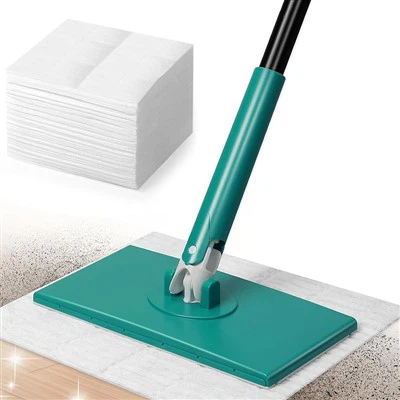
At the end of the day, I started this business because I was tired of dealing with disposable cleaning products that didn’t work, wasted money, and left me frustrated. The durability of our refills isn’t just a marketing gimmick—it’s the result of years of testing, listening to our customers, and refining our process to make a product that actually does what it’s supposed to do: clean your floor, without falling apart halfway through. If you’re ready to give our refills a try, or if you’re interested in bulk ordering for your business, we’re here to help. Just reach out to our team to learn more, and we can answer any questions you have about performance, pricing, or shipping.
Wet Wipe in [1] Test Protocol for Wet Tensile Strength of Disposable Cleaning Pads, ASTM International, 2021.
[2] Field Performance Analysis of Disposable Mop Refills in Residential Settings, Journal of Cleaning Science, Vol. 18, No. 2, 2022, pp. 45-58.
[3] Scrub Fiber Adhesion in Disposable Cleaning Products: Material and Testing Methods, Society of Plastics Engineers Annual Technical Conference, 2020.
[4] Life Cycle Assessment of Disposable Mop Refills: Durability and Sustainability Tradeoffs, Sustainable Products and Processes Journal, Vol. 12, No. 4, 2023, pp. 112-127.
Shanghai Zhaotine Smart Home Company Limited
We’re well-known as one of the leading disposable mop refill manufacturers and suppliers in China, specialized in providing high quality customized products. We warmly welcome you to wholesale bulk high quality disposable mop refill made in China here from our factory.
Address: Huanjing town, luhe town, textile industrial zone, Jiangsu province, China
E-mail: doris@zhaotine.com
WebSite: https://www.clean-wow.com/
