Hey there! I’m a supplier of enamel wire, and I know how crucial it is to ensure the quality of our products. One key aspect is detecting enamel coating defects in enamel wire. In this blog, I’ll share some of the ways we do it, based on my experience in the industry. Enamel Wire
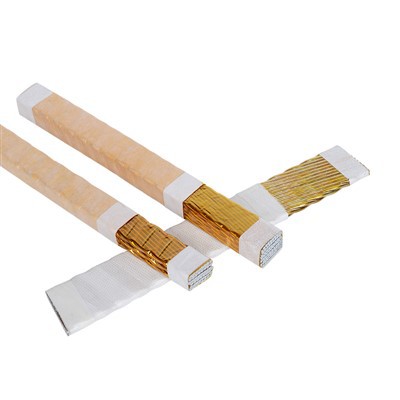
First off, let’s understand why detecting enamel coating defects is so important. Enamel wire is used in a wide range of applications, like motors, transformers, and inductors. A defect in the enamel coating can lead to all sorts of problems. For example, it can cause short – circuits, which can drastically reduce the lifespan of the electrical device and even pose a safety hazard. So, making sure the enamel coating is defect – free is essential for the performance and safety of the end – products that use our enamel wire.
Visual Inspection
One of the simplest and most straightforward methods we use is visual inspection. It might sound basic, but it’s actually quite effective in catching some obvious defects. We have trained workers who carefully examine the enamel wire under proper lighting conditions. They look for things like scratches, chips, and uneven coating thickness.
Scratches are pretty easy to spot. They usually appear as thin lines on the surface of the enamel. If a scratch is deep enough, it can expose the bare wire underneath, which is a big no – no as it can lead to electrical issues. Chips, on the other hand, are small pieces of the enamel that have come off. These can also cause problems by creating weak points in the coating.
Uneven coating thickness can also be detected visually. If one part of the wire has a much thicker or thinner coating than the rest, it might not provide the same level of insulation. Workers often use a simple magnifying glass to get a closer look, especially for smaller defects that are hard to see with the naked eye.
However, visual inspection has its limitations. It can’t detect internal defects or very small defects that are not visible on the surface. So, we need to combine it with other methods.
Electrical Testing
Electrical testing is another crucial way to detect enamel coating defects. There are a few different electrical tests we use, and I’ll go through the main ones.
Hi – Pot Testing
Hi – pot testing, short for high – potential testing, is a widely used method. In this test, we apply a high voltage to the enamel wire for a short period of time. The idea is that if there’s a defect in the enamel coating, the high voltage will cause a breakdown in the insulation, and we’ll detect a current flow.
We set up a test circuit where the enamel wire is connected to a high – voltage source. The voltage we apply depends on the type and specification of the wire. For example, for some low – voltage applications, we might apply a few hundred volts, while for high – voltage applications, it could be several thousand volts.
If there’s a defect in the coating, the high voltage will cause an arc or a spark to jump through the weak point in the enamel. We have sensors in the test circuit that can detect this abnormal current flow. If a defect is detected, we mark or separate that part of the wire for further inspection or rejection.
Capacitance Testing
Capacitance testing is also a useful electrical test. The capacitance of an enamel – coated wire is related to the thickness and integrity of the enamel coating. A defect in the coating can change the capacitance value.
We use a capacitance meter to measure the capacitance of the enamel wire. We compare the measured capacitance value with the expected or standard value for that particular type of wire. If the measured value is significantly different from the standard value, it could indicate a defect in the enamel coating.
For example, if the capacitance is too high, it might mean that there’s a thinner area in the coating, which could lead to reduced insulation. On the other hand, if the capacitance is too low, there could be a problem like a void or a thick, non – uniform layer in the coating.
Thermal Testing
Thermal testing is another effective way to find enamel coating defects. The basic principle behind thermal testing is that a defect in the enamel coating can affect the heat transfer properties of the wire.
We use a thermal imaging camera to take pictures of the enamel wire as it’s carrying an electrical current. As the wire conducts electricity, it generates heat. In a wire with a perfect enamel coating, the heat is distributed evenly. But if there’s a defect in the coating, the heat will accumulate in that area, creating a hot spot.
The thermal imaging camera can detect these hot spots because they show up as areas of different temperatures on the image. Once we identify a hot spot, we can further investigate the wire to determine the cause of the overheating, which could be a defect in the enamel coating.
Chemical Analysis
Chemical analysis can also be used to detect enamel coating defects, although it’s a bit more complex and time – consuming. We can use techniques like spectroscopy to analyze the chemical composition of the enamel coating.
If the enamel coating has a defect, it might have an abnormal chemical composition in that area. For example, if there’s contamination in the coating during the manufacturing process, the chemical analysis can detect the presence of foreign substances.
We take small samples of the enamel wire and use a spectrometer to analyze the light absorbed or emitted by the sample. The spectrometer can provide information about the elements and compounds present in the coating. By comparing the results with the standard chemical composition of the enamel, we can identify any deviations that might indicate a defect.
Ultrasonic Testing
Ultrasonic testing is a non – destructive testing method that can be used to detect internal defects in the enamel coating. We use high – frequency ultrasonic waves to scan the enamel wire.
When the ultrasonic waves encounter a defect in the coating, such as a void or a crack, they are reflected or refracted differently. We have sensors that can detect these changes in the ultrasonic waves. By analyzing the signals received by the sensors, we can determine the location and size of the defect.
This method is especially useful for detecting defects that are not visible on the surface or that are located inside the enamel coating.
Conclusion
Detecting enamel coating defects in enamel wire is a multi – step process that involves a combination of different methods. Visual inspection is a good starting point, but it needs to be complemented by more advanced techniques like electrical testing, thermal testing, chemical analysis, and ultrasonic testing.
At our company, we take quality control very seriously. We use all these methods to ensure that the enamel wire we supply is of the highest quality. We know that our customers rely on our products for their electrical applications, and we want to make sure that they get a defect – free product.
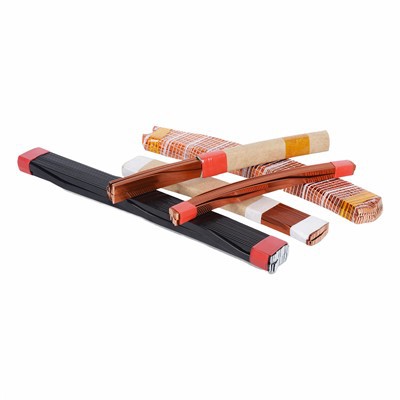
If you’re in the market for enamel wire and are concerned about the quality of the enamel coating, we’d love to talk to you. We can provide detailed information about our quality control processes and how we ensure defect – free products. Contact us to start a conversation about your specific requirements. We’re here to help you find the best enamel wire solution for your needs.
Enamel Wire References
- Electrical Insulation Handbook, various authors
- Principles of Non – Destructive Testing, industry publication
- Enamel Wire Manufacturing and Quality Control Guidelines, professional association document
Tianjin Jingwei Power Technology Co., Ltd.
As one of the most professional enamel wire manufacturers and suppliers in China, we’re featured by quality products and good service. Please rest assured to buy durable enamel wire made in China here from our factory. Contact us for more details.
Address: No.1 Chuangxin Rd. Xiaozhan Industrial Park, Jinnan District, Tianjin, China
E-mail: info@jwdc.cn
WebSite: https://www.jw-dcs.com/
